
Collective care starts with the self
Year in school: Senior
Coffee or tea: Both! I love a hazelnut latte or a masala chai.
Favorite CHC Class: “12,000 Colors” with Christopher Michlig
Song on repeat: “Perfect Places” by Lorde
#1 home-cooked meal request: My mom's homemade samosas or masala dosa
I can't live without: My earring collection
When I was a first-year student, I wish I knew: To slow down and enjoy it all! Four years passes by quickly.
Dream job: Therapist
From the solitude of her Beaverton bedroom, Alekhya Bhupalam took every class for her junior year of high school online. Living and learning through the pandemic was “an incredibly isolating experience,” recalls the Clark Honors College senior. A virtual movie night with friends was the occasional bright spot.
That tough year did have one other highlight: an international baccalaureate psychology class that illuminated Bhupalam’s path as a college student.
Not only did she discover a fascination with psychology, Bhupalam says that year in lockdown led her to realize the importance of access to mental health care. That’s especially true in cultural communities like her own where reaching out for help can be difficult.
Though attitudes vary from person to person, Bhupalam says seeing a therapist “can definitely be a point of contention” in the South Asian community she comes from.
Through research she is currently doing and her plans after graduation, Bhupalam is determined to normalize and improve access to mental healthcare for South Asians and people of color, in general.
With her anticipated dual degree in psychology and family and human services, her goal is to become a social worker and therapist so that members of her community can see a familiar face and feel more comfortable receiving support.
“That high school class made me realize how mental healthcare isn’t as valued in some communities as others, and the stigma,” Bhupalam says. “That’s a big part of what I want to try to help achieve in the field.”
The heart of her world
Bhupalam was raised in a Portland suburb known for its Asian community. Adjacent to Beaverton, the Bethany neighborhood is a hub of first- and second-generation immigrants from China, Korea, Vietnam and the Philippines, but primarily Indians like Bhupalam. She and her younger sister grew up walking distance from schools in a house her parents built there after immigrating from India.
Many were drawn in by the nearby Intel campuses, and Bhupalam’s father, a computer scientist, was among them.
“He tried to get me into it,” Bhupalam recalls, even getting her a coding kit, but computer science was not for her. Nor were other STEM career pathways like medicine or engineering. “I thought that was something I was gonna do, but obviously, not,” Bhupalam says. “I want to get my master’s in social work, become a therapist and do direct service. Telling my parents that, especially my mom, was a little bit difficult at first.”
Preconceptions existed about how much money she could make or what the work entails, but once she explained what practicing counseling meant and what it would allow her to do, they became much more accepting of her dreams.
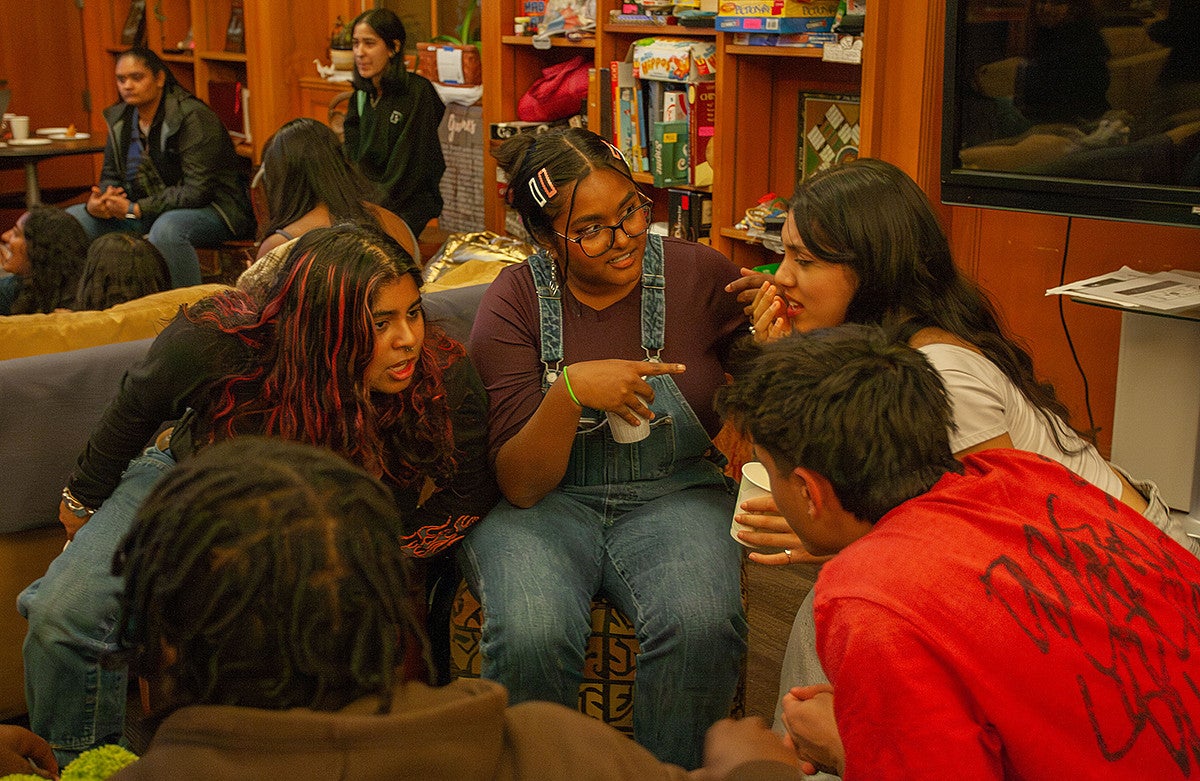
Community means everything to Bhupalam. It’s all she’s known growing up, so for college, she was looking for a home away from home. She pictured herself at a small school but was hooked on the University of Oregon when she learned about the Clark Honors College and its small-college-in-a-major-research-institution vibe.
She remembers visiting campus for Duck Days with her father. "I was really excited about psychology generally, so I went to the psych info session, and Dr. (Jagdeep) Bala was talking about it. Seeing a South Asian woman talking to me about psychology was really cool,” she recalls.
A growing sense of purpose
Her focus in psychology has only strengthened after her first year.
“My passion for wanting to help people of color and people from marginalized communities hasn’t changed, but it has exponentially increased,” she says.
When an advisor recommended adding the Family and Human Services major, she “fell into it,” she says, but since has fallen in love with program and the people in it. She’s in the direct services intensive pathway and is currently fulfilling its internship requirement at St. Vincent de Paul’s First Place Family Center, which operates a preschool as well as a day and overnight shelter for families experiencing houselessness. Working with kids or adolescents in the future is one path in social work she’s drawn to.
“That’s been a really cool experience; seeing how that runs, being out in the real world and applying what I’ve seen and learned,” Bhupalam says. “They’re all really sweet kids and they just want a place to play. It’s nice to be there and help them engage in their play when I can.”
Since her freshman year, participating in research has characterized her psychology major. She’s been an assistant in the ADDRESS Mental Health Lab run by professor of psychology Alayna Park.
Getting into the lab almost didn’t happen: Bhupalam missed the application deadline and “cold-emailed” Park as a last resort. She was connected with a graduate student in the lab and eventually offered an interview and then the position. Her work in the lab served as the basis for her thesis project.
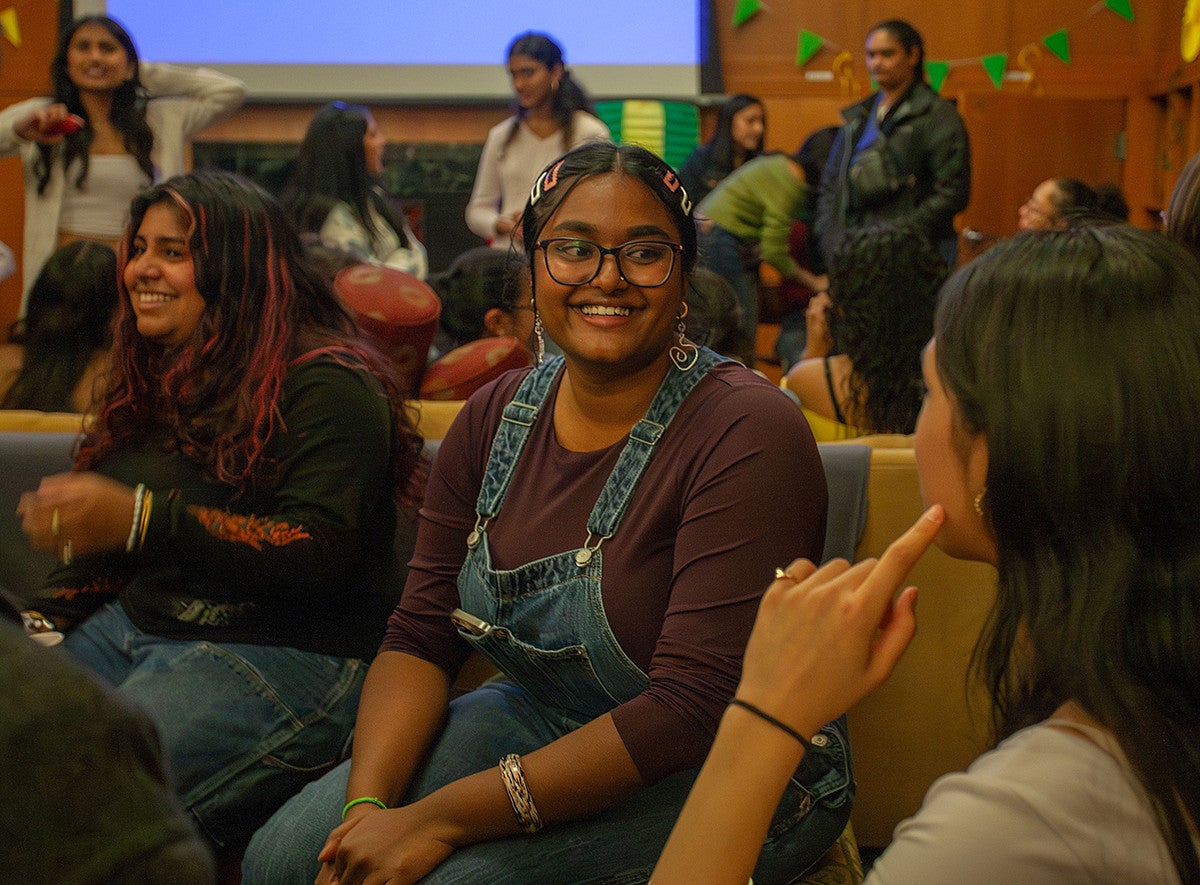
Around that time, Bhupalam joined the South Asian Cultural Alliance, or SACA, and found her true campus home. Since then, she’s become a general volunteer board member in the club and met some of her best friends.
Bhupalam lights up talking about the group, which exists not only to connect members of the community but also to celebrate their shared culture through vibrant events like the Diwali celebration or her favorite, their signature Bollywood Ball.
“We describe it as a South Asian prom,” Bhupalam says. “We get a DJ, music playing the whole night, food catered, and everyone dresses up in traditional clothes. A lot of our events are like that, but this one’s very special, you’re just dancing the whole night and it’s a really safe space for everyone, including a lot of my non-South Asian friends who come to support.”
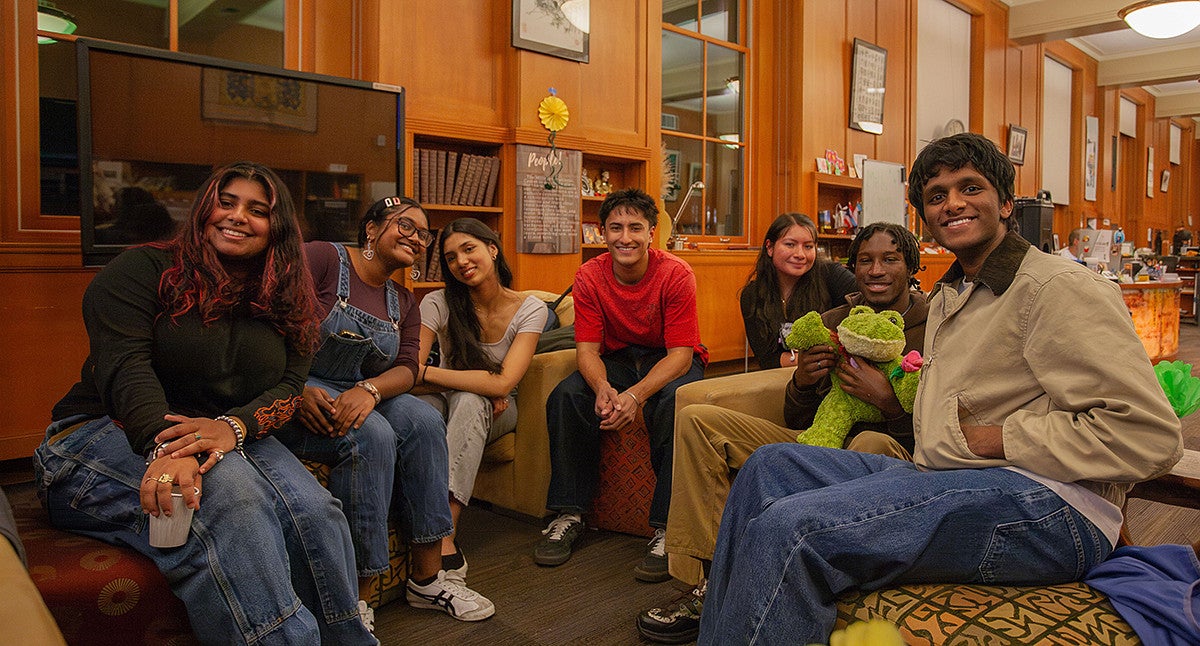
As with SACA, Bhupalam’s gratitude for the CHC comes from the intangible shared space the college holds for its students. “It’s just awesome to be in CHC classes; to have that discussion space with everybody from different disciplines and to be able to hear different perspectives,” she says. “To me, CHC just means community. We can connect over what we’re learning and it’s very accepting and open-minded. I’m always learning new things in my CHC classes.”
A favorite class was Displacement and Health with Professor Yalda Asmatey, which looked at domestic and international refugee populations and impacts on their physical and mental health. Bhupalam is minoring in global health, and has stayed in touch with Asmatey, who is now serving on Bhupalam’s thesis committee.
“Alekhya has a presence that reminds you on any given day, at any moment, that circumstances could be better, and that we choose to think and feel in certain ways, and that we have total control over how we feel,” Asmatey says.
Bhupalam’s sense of identity is powerful, and when the two would talk, Asmatey says, “she would sort of hold up a mirror and allow me to reflect in the process of our conversations… this explains why I believe she’s going to thrive as a therapist.”
Changing the culture of care
In the ADDRESS Mental Health lab, Bhupalam has worked on a few big, multi-year projects, including the one her thesis is based on. She helped a doctoral student collect and analyze data about how the public perceives various free, online mental health resources. They interviewed student participants about the websites and then Bhupalam and the team used qualitative coding techniques to compare the interviews and the websites.
For her thesis, Bhupalam is specifically measuring and cataloguing the degree of racial-ethnic representation in the resources. She observed either surface-structure adaptations, such as photos of people of color or pages into multiple languages, or deep-level adaptations, such as direct references to the impacts of structural racism.
Then Bhupalam looked for any correlation between the varying levels of representation and the user’s experience with the website. Did they find the site relevant? Did they approve of its guidance? Would they recommend it to friends? And did any of that align with how diversified the site was?
“She identified an important gap,” Park, her primary thesis advisor, says. Watching Bhupalam grow as a leader on research projects and as a mentor for younger students has been wonderful, she says.
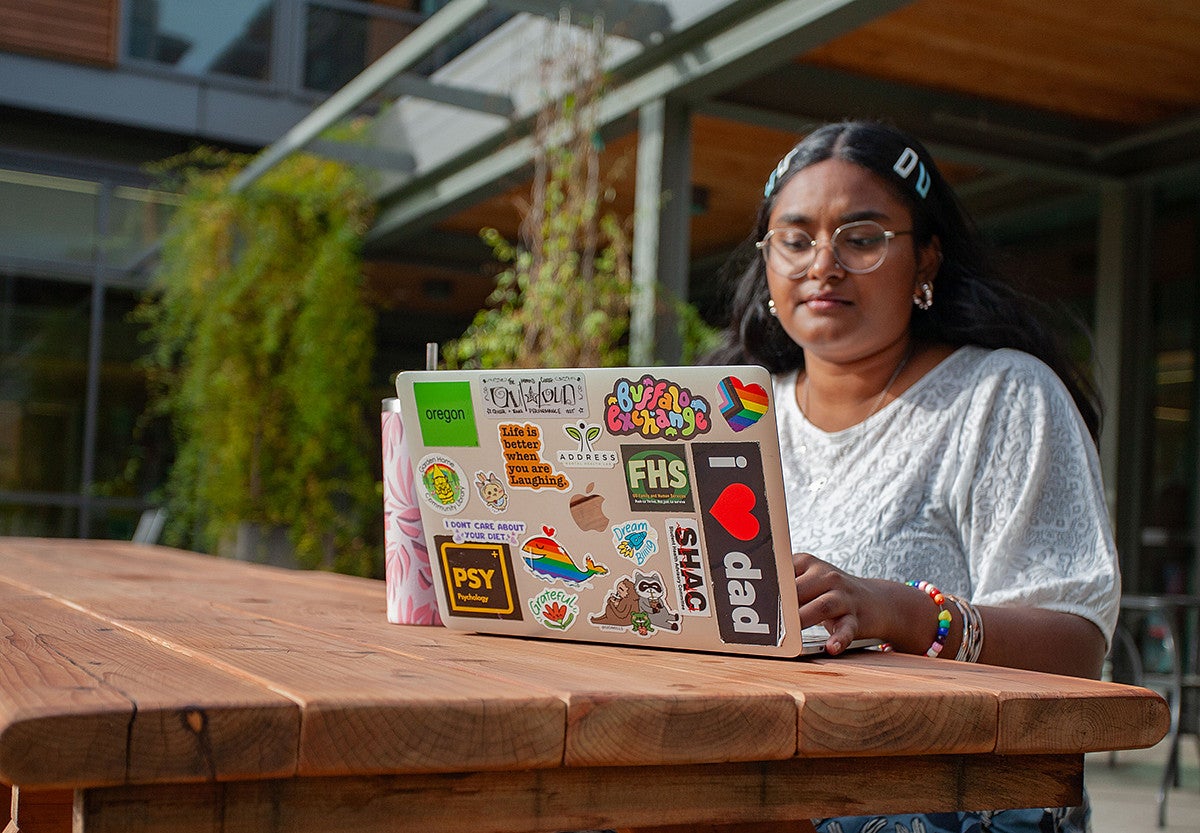
This research isn’t the only way she is working to translate student experiences with healthcare into structural change. She’s also on the student advisory bodies for University Health Services and Counseling Services. In both roles, she’s a liaison between students and professional staff, and she chairs the Counseling Servies Student Advisory Board.
Earlier in college, Bhupalam sought therapy at Counseling Services.
“I didn’t fully consider therapy as an option until entering college,” she says, but when she and a friend decided to try the free services during their sophomore year, it significantly reduced her stress. When she joined the board shortly afterward, the work energized her.
“Being on the SAB helped me think critically about the system and also spread awareness of the wonderful services on campus for students to support their mental health,” Bhupalam says.
Awareness is key to reducing stigma around mental healthcare, Bhupalam says. When she sought therapy, she was a bit worried how her parents would react.
“When I told my mom, she was very intrigued. She asked me all the questions, like ‘Is it the typical thing like where you lie down and they're talking to you, like what you see in the movies?’” Once they better understood her experience, Bhupalam’s family was very supportive of her seeking therapy.
“The stigma really rises from misinformation,” she says. “A lot of times, you’re not given accurate information, or you just have this completely different conception of what it actually is.”
Her proudest work with the advisory board is hosting the annual Fresh Check Day to kick off Mental Health Awareness Month in May. The free, interactive campus resource fair uplifts mental health awareness at a particularly stressful moment for students. The same week, SAB puts on the Out of the Darkness Walk, which focuses on suicide prevention.
“It’s just awesome to be in CHC classes; to have that discussion space with everybody from different disciplines and to be able to hear different perspectives. To me, CHC just means community. We can connect over what we’re learning and it’s very accepting and open-minded.”
Burnout is extremely common in psychiatric and social work, and it’s talked about frequently in Bhupalam’s courses. With all she’s involved in on campus, Bhupalam experiences it herself. She’s learned to protect her vanishing alone time, resting or watching favorite shows. Spending time with her community also fills her cup.
As she prepares to enter the profession, Bhupalam says the political climate and instability in funded research can feel intimidating.
“This is such a scary time, but that also in a way motivates me. Being hopeful motivates me. Taking rest, too; rest is resistance. But also hearing about what other people are doing, the good nuggets in all the uncertainty and bad going on, does help,” she says. “And just knowing I can make an impact in the future: I just have to keep going.”