
Comics or Shakespeare? Professor Ben Saunders says both
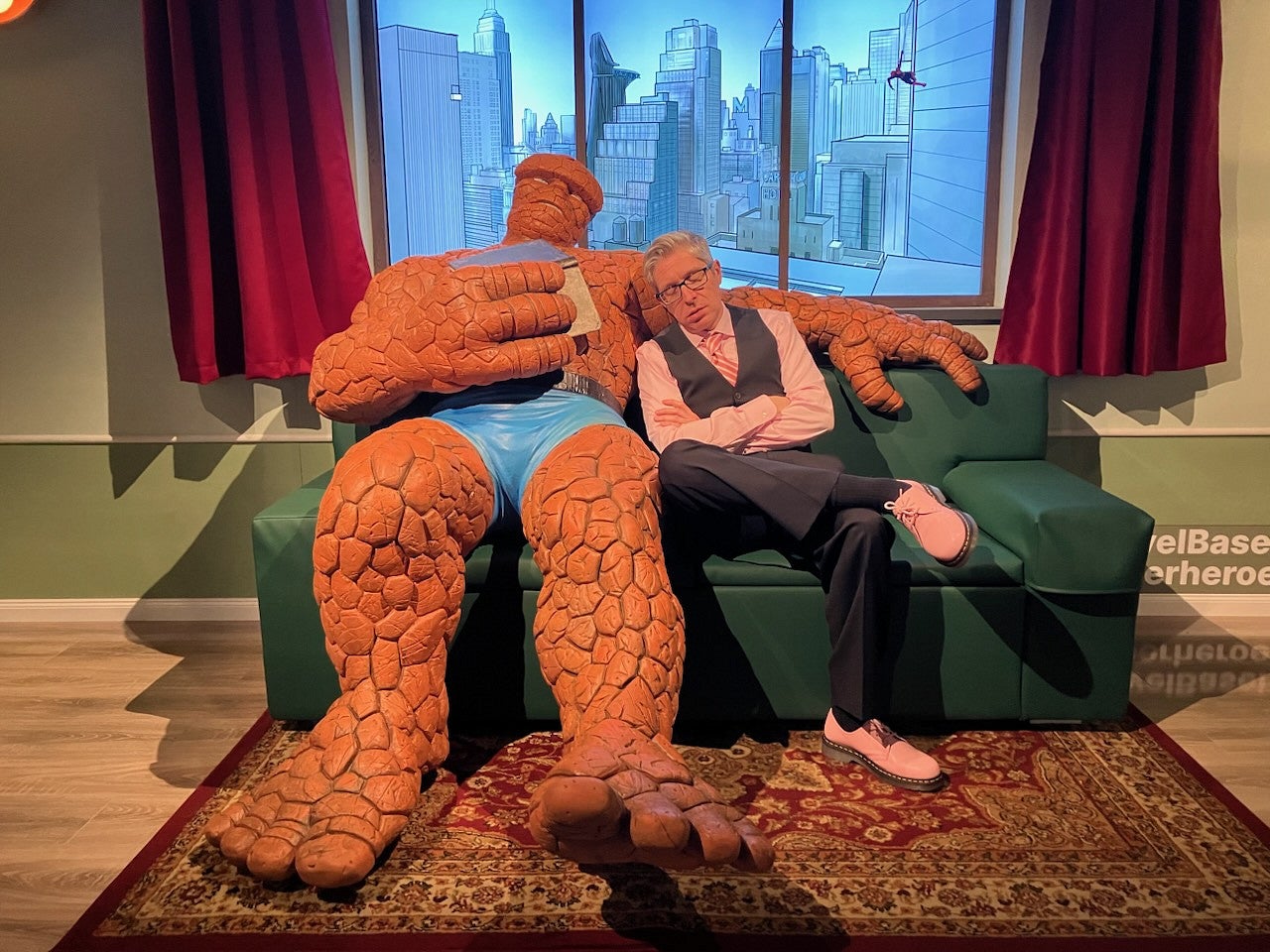
If you happen to find yourself in a conversation with Ben Saunders, professor of English and Comics and Cartoon Studies, be ready to give yourself plenty of space to laugh, cry and truly wrack your brain to understand what drives an educator to be as fluent in comic books as he is in poetry.
Throw in a few acknowledgements about how Saunders, who is now a professor and core faculty member at the Clark Honors College, can be a fanboy of Doctor Who and you’ll get a sense of how his comedic approach and his liberal arts side coexist.
“As a kid, I always liked science fiction and fantasy,” he says. “I learned to love reading through comic books.”
Born in Cardiff, Wales in the United Kingdom, Saunders remembers fondly how his grandmother took him into the city center every Saturday morning. She would drop him off at a bookstore while she ran errands and when she returned, he’d get to pick out a comic book that she would purchase for him.
“She never tried to censor what I got,” he recalls. “She never looked at them and said that I should read ‘real’ books. There was no judgment and they started me down the path of loving reading.”
That path led to Saunders loving literature, poetry and Shakespeare, among other things. He attended the University of East Anglia in Norwich, England, and majored in English literature. He got a Master of Philosophy in English Renaissance literature at Cambridge University before traveling to North Carolina’s Duke University where he earned his PhD. in English literature.
But the love of comics never left him. At UO, he is the director of the Comics and Cartoon Studies minor and a tenured professor of English, and he’s lectured on everything from Batman to John Donne’s poetry.
At the CHC, he’ll be teaching a 200-level course called “Intro to Comic Studies” and a 400-level course called “Sex, Identity, Theology and 17th Century Poetry.”
Over the summer, we met with Saunders to discuss his new gig at the CHC, his love of reading and how he spends his time delving into comic book characters as well as the literary giants of English literature.
The interview was edited for brevity and clarity.
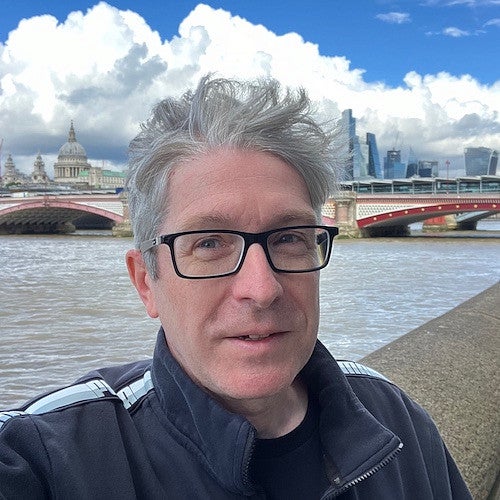
Ben Saunders
Role model: Does this mean people who have influenced me positively or people who have set aspirational examples I admire but know I could never match? If the former, I guess my mother, and my favorite undergraduate teacher, Peter Womack, would be very high on the list. If the latter, Jack Kirby, Albert Woodfox, Etty Hillesum, and Joe Sacco.
Favorite book: I can’t name just one! But the Bates translation of the Wilhelm translation of the I Ching is probably my most consulted book.
Favorite TV show: Doctor Who from 1963-1989 and 2005-2025
Do you binge on anything: Book buying
Hobbies: Karaoke. Dungeons & Dragons. Watching Dr. Who.
What CHC students should know about you: I’m not so old that I don’t remember how challenging university can be – or how much fun it can be – and I want to hear about how those things are for them, too.
You talked about your grandmother’s influence on your reading. What was your childhood like?
My parents did a role-swap — which was highly unusual in Wales in the 1970s — so my father stayed at home, raised me and my brother, cooked dinner most nights, did the cleaning and laundry, while my mother went out to work. He also made art. He wrote poems, painted pictures, played the piano (by ear, very well) and wrote songs, and I was the first audience for most of it, from a very young age.
Meanwhile, my mother was a kindergarten teacher, so she really valued education and was on my case about homework. Only natural for me to become a literary critic, I suppose, given that environment.
My sibling is six years younger than me, so when he was very young I had a strong sense of responsibility because I was bigger and needed to be careful when we played not to hurt him or push him around. We bonded most over a love of music – my dad’s music at first – and also recorded music. We still bond over music. But he’s as much a guide to me as I ever was to him. He grew up faster than I did, and had a child 15 years before I did. Sometimes, I think he’s the older and wiser one.
When you first got to the states, what was life like for a Cardiff man living in the Deep South?
The culture shock was enormous. Much greater than I anticipated. I didn’t drive when I moved to the South – and it’s really not designed for that, so I had to learn fast. A really kind driving instructor, Melvin Majette, took pity on me. I had very little money and could only afford a handful of lessons, so he drove me around the roads where I would actually be tested, drilling me on all the things I’d be asked to do by the person who gave the test.
I still almost managed to fail by hitting the accelerator instead of the brake as I was trying to park. The woman giving the test actually screamed in fright. I turned to her and, using my poshest, plummiest vowels, Hugh Grant-style, said: “Oh, I’m terribly sorry, I hope I didn’t scare you. And it was all going so well.”
And she looked at me for a second or two and then said, “Well, ya need to work on yaw pawkin, son.” And then she told me I passed.
I guess that story epitomizes my early experiences in the South. I leaned hard into the lost “Little Lord Fauntleroy” vibe and relied rather too heavily on the kindness of strangers.
How did you find your way to the University of Oregon?
Funny, I had only been in the U.S. for a few weeks and a friend – an American I had known in the U.K. from undergrad days when she was an exchange student – came to visit. She had gone to school in the Pacific Northwest and had all these amazing black and white photos she had taken at the Oregon Coast – the rocks and waves, Heceta Head and its lighthouse, etc. And I thought, “I want to go to there.”
But you know, the academy resembles the military in one way – you go where you are stationed. It would be the height of hubris to try to get a PhD. in the humanities and assume you will have any choice about where you work, at least if it’s a tenured gig you are pursuing. I ask students who want to do what I do if it’s very important to them to be able to choose where they live or if it is more important that they love the work and don’t care that much about where they do it. If the latter, then go ahead and get that PhD. But if choosing where you live is a priority for you, you should probably not get your heart set on a tenure track research position, because there just aren’t that many jobs.
I applied to at least 20 schools all over the country – East Coast, Midwest, the South – as well as the UO. There were 227 applicants for the UO job. The scarcity of academic jobs means that in any given year a job at the UO – in any field – is going to be one of the top five positions on offer. It’s never not going to be a desirable job and it is always going to be fiercely competitive.
So, I guess the answer is that I got to the UO because I was incredibly, unbelievably, unfairly, absurdly lucky. I try to remember that whenever I find myself feeling annoyed or resentful about work – “There were 227 people who applied for your job, so maybe you should be grateful for it?”
Now that you are teaching at the Honors College, what advice would you give your students? What kind of ride are they in for if they take a class from you?
The world is changing so fast. I imagine the future sometimes feels scary to them. And it feels scary to me, too. But I find I do better when I can remember what I don’t know, and stay curious, even about the things that are scary. So, I guess I would say: “Be curious.” And I will try to encourage – and reward – genuine intellectual curiosity.
To read more about Saunders, check out these links:
All Hail the King of Comics, Jack Kirby
Munger returns to CHC to teach marine biology
Lisa Munger is returning to the Clark Honors College after two years at the University of Hawaii at Manoa.
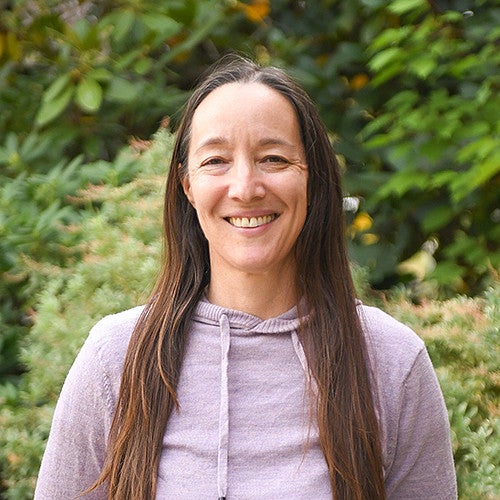
Lisa Munger
Hometown: Boulder, Colorado
Favorite food: Noodles and dumplings of all sorts
What you missed most while you were away: The fall and spring seasons
What you are reading now: Course materials
First three stops when you got back to Eugene: El Super Burrito, Hideaway Bakery, Spencer Butte summit hike (to work off all those calories)
What is it about teaching at the CHC that excites you? Name as many things as come to mind.
Oh, gosh. So many things. I love the freedom and flexibility we all have, faculty and students alike, to explore our curiosity and be creative. It is a gift to be able to design and teach innovative, topical courses where I can bring my discipline of natural science to the table in a larger conversation where a multitude of perspectives and expertise come together.
I also really enjoy the mentorship aspects of being in the CHC. It’s a joy to get to know students through teaching and advising right from the start in their first year, and to be there to support and cheer them on all the way through to graduation.
What did you miss most about the CHC?
Lots of things. But probably top of the list are the supportive community and sense of belonging.
The water seems to be your happy place. Why is that?
Well, to be a scientist about it, the mammalian dive reflex causes your heart rate to slow when you’re in the water, and it can have a very pleasant, calming effect. But the more personal explanation is that I grew up in Southern California going to the beach as much as possible, and fell in love with it all—the critters, the seaweed, the waves, the wildness of it.
Can you tell us a little bit about an experience that originally attracted you to studying marine biology?
So, there’s this small ocean fish called a grunion that comes to shore to lay eggs in the sand during certain times of the year on California and Baja beaches. My parents took me to a “grunion run” when I was little, maybe 8 or 9 or so, and it was a great adventure. I got to stay up late (the fish come up during a low tide at night) and wander the beach with a bucket, a dipnet, and flashlight, watching them dig their little burrows, catching them for a little while to get a good look, then releasing them. I hear they are edible, but kinda bony and not the greatest to eat.
Some folks were more systematically measuring their fish and keeping count, and there were other families with kids, and we were all trotting around and squealing and chatting and comparing observations. Not to mention I got to drink hot cocoa around the bonfire (and I think fall asleep at that point). It was fascinating and special, and it made me curious about all the things that live in the ocean and what other kinds of crazy lifestyles they lead.
Name the top 3 things students will learn about in one of your classes.
The scientific process. This is kind of an all-encompassing term that entails many skills, like close observation, formulating ideas and predictions, quantifying data, and evaluating evidence, that are translatable (and, I would argue, essential) no matter where your path takes you.
Project management and collaboration—again, these are transferable skills that all employers will be looking for. I know, I know, everyone dreads the group project. My goal is to help students discover how inspiring, powerful, and fulfilling it is to create something as a team that is more than the sum of its parts.
Appreciation and care for our Earth, our oceans, and our interconnectedness.
What is your favorite sea creature and why?
This question always throws me. How can I possibly have just one favorite? Alright, how about my current favorite, Kinoryncha, commonly known as the “mud dragon.” They are microscopic animals that live in marine sediment, and they are part of a general group of similarly tiny organisms called meiofauna that live among (like, literally in between) the grains of mud or sand. They look wicked cool under a scanning electron microscope.
What would you say to a student to convince them to come to the CHC and take one of your classes?
Tap into your inner scientist, come ask a question you’ve always wondered about, enjoy the learning process, get some analytical skills under your belt, geek out with your fellow nerds, and have fun. There aren’t too many college courses where you can papier-mache an 11-foot sperm whale skeleton for a class project and call it “science.” But mine is one of them!
CHC adds three new visiting instructors
Each year, visiting instructors bring new energy to the Honors College by offering courses we couldn’t otherwise teach. They share their passion for their respective fields, and they give students fresh ways of seeing the world.
Two of them – Ian Callison and Hilary Zedlitz – will be teaching courses in political science. Tim Smit will be teaching courses in history. Meet this year’s visiting instructors below.
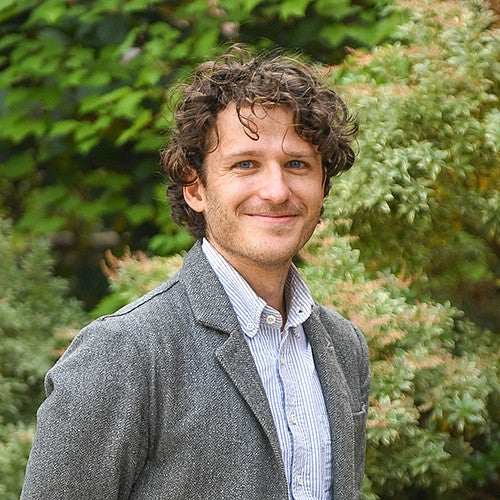
Ian Callison
Hometown: Gaylord, Michigan
Favorite hobby: Running
Undergrad degree: B.S. in journalism from Central Michigan University
Other degrees and where from: PhD. in political science from the University of Washington; M.A. in political science from Central Michigan University
How a close friend would describe you: Food-motivated
Three things you can’t live without: A good rain jacket, a headlamp, and Dawn dish soap
What you hate most is: Having really fine sand residue between your toes after you leave the beach
Three people - living or dead - that you would invite to your house for dinner: Anthony Bourdain, Fatou Bensouda, Kilian Jornet
What is something that all students should know about you: I’m always open to recommendations for restaurants and coffee shops
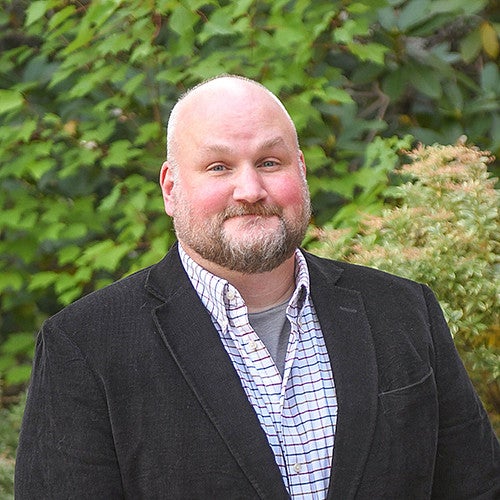
Tim Smit
Hometown: Marquette, Michigan
Favorite hobby: Either reading or hiking
Undergrad degree: B.A. in history from Carleton College
Other degrees and where from: M.A. in history and Ph.D. in history, both from the University of Minnesota
How a close friend would describe you: Boring
Three things you can’t live without: Big water, coffee, and books
What you hate most is: Unfairness
Three people - living or dead - that you would invite to your house for dinner: Saint Francis, John Brown, and my grandfather
What is something that all students should know about you: I am always excited to talk about the past.
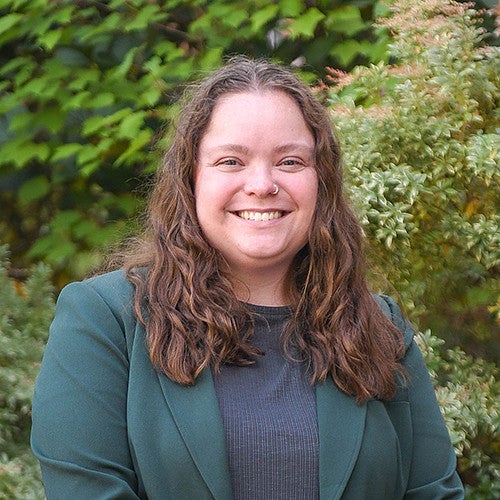
Hilary Zedlitz
Hometown: Rogers, Arkansas
Favorite hobby: Tap dancing
Undergrad degree: B.A. in political science and Middle East studies from University of Arkansas
Other degrees and where from: M.A. in political science and Ph.D. in political science, both from the University of Michigan
How a close friend would describe you: Trustworthy, driven, overly invested in the outcomes of a boardgame, and likely lost on a side quest.
Three things you can’t live without: Caffeine, conversations, and books
What you hate most is: Two factor authenticators
Three people - living or dead - that you would invite to your house for dinner: A conference of Hilarys sounds delightfully weird to me, so I’d invite Hilary Duff, Hilary Swank, and Hillary Clinton.
What is something that all students should know about you: I’m a recovering perfectionist. Because of that, I care more about curiosity, intellectual risks, and the willingness to ask difficult questions than I do about finding the single "right" answer.