
Three things the CHC Alumni Project taught me about what comes next
Mirandah Davis-Powell is a senior in the Clark Honors College, who is majoring in journalism and has minors in Spanish and food studies. She works as a writer for Eugene Weekly through the Catalyst Journalism Project, an investigative and solutions-journalism incubator based at the SOJC. This is her third year as a writer for the CHC Post.
I didn’t come to the Clark Honors College expecting that it would always relate to choosing journalism as my career choice. I saw it more as a place where I’d be able to stretch myself as a critical thinker, immerse myself in the liberal arts, and focus on improving my writing. After all, my CHC courses on the philosophy of food, Louis Armstrong, and sourdough bread weren’t exactly resumé lines that potential daily newspaper employers are looking for.
But I’d be lying if I said I wasn’t also the kind of person who spends a lot of time thinking about what comes next. I’ve made dozens of plans in the past four years for what I wanted to do after graduating. Now, as that date approaches, the innate urge to plan has only grown louder. I’ve had a good idea of the kind of role I’d like to be in; I just wasn’t always completely sure how to get there.
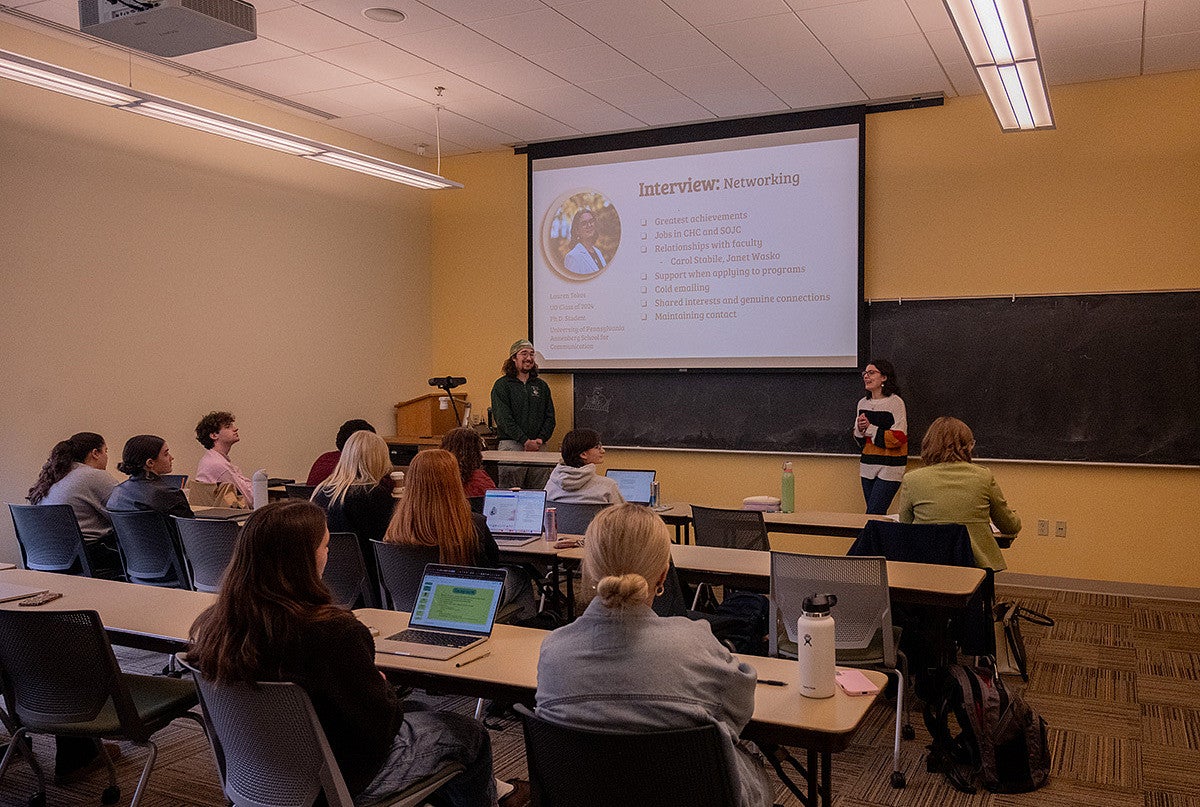
One of the last courses I will take in my undergraduate career – “The CHC Alumni Project” – helped me immensely with that. The new two-credit networking course that started in winter term connects Honors College students at every grade level with dozens of alumni across a variety of careers. The class centered on journalism, communications and media, and more classes are planned for spring term and fall term next year. Sections in spring will offer business and entrepreneurship and health professions; in fall there will be a class on the law profession.
My class touched on everything from cold emailing to informational interviews to building a strong resumé and LinkedIn page. But the most useful lessons came from the alumni themselves.
“Perhaps most importantly, students are learning that career paths tend to be winding rather than direct routes,” says Elizabeth Raisanen, assistant dean of advising and distinguished scholarships at the CHC, who taught the course this term.
Here are my top takeaways from alumni this term after spending ten weeks in the course:
1. Networking is based on people skills
A lot of young people think applying for a job is as simple as going to a job-search website, plugging in your resumé and attaching your LinkedIn profile. I learned that if you stop there, you might be waiting a long time for that job. People skills, such as empathy and effective communication, are key to making lasting connections. Networking shouldn’t be transactional; it should be personal.
Beyond the basic deliverables, the course introduced me to “The Network,” the CHC’s new mentoring platform built specifically for students, faculty and alumni to connect along the job-seeking journey. This resource encourages you to lean into new connections, and the alumni we spoke to who volunteered to participate easily made the case.
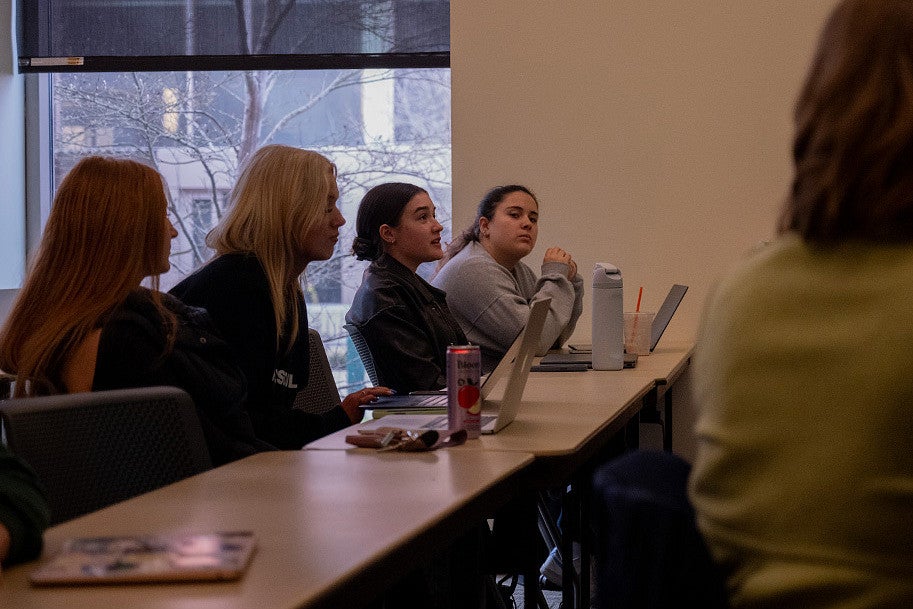
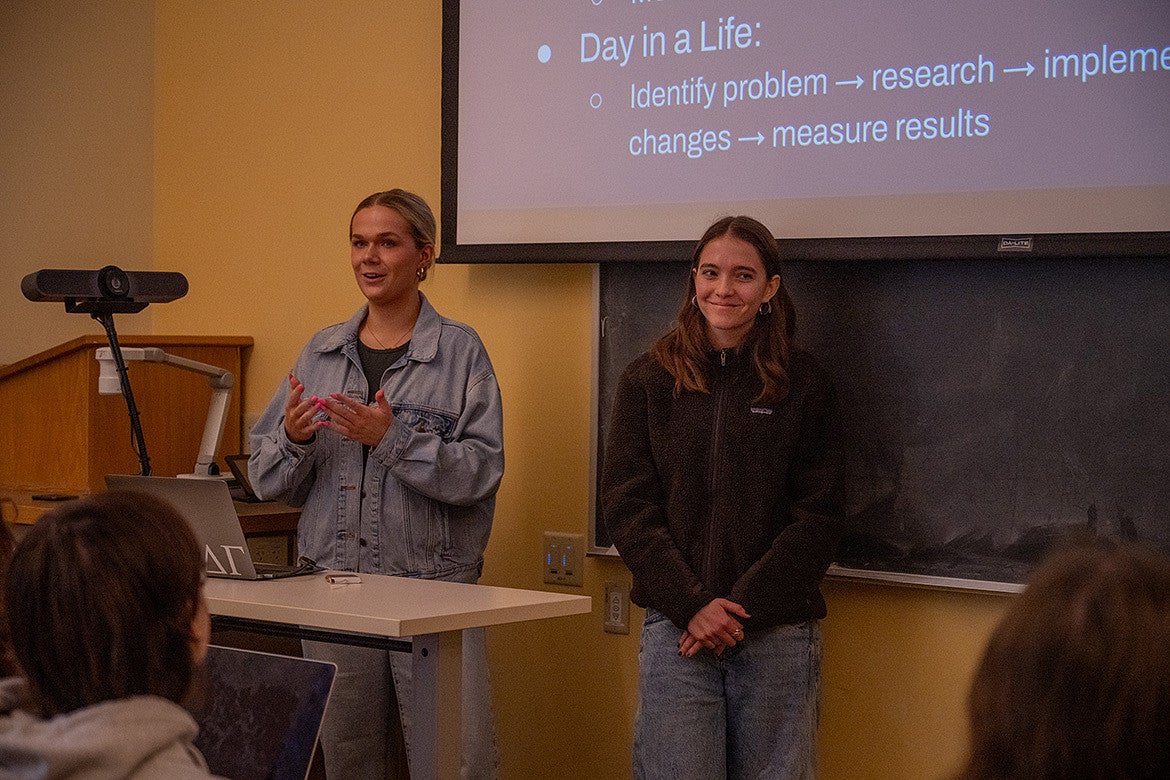
I spoke to Lorie Acio, CHC Class of 2011, who landed her first internship at CBS News through a connection that started in a classroom. It was Acio’s senior year when a CBS recruiter visited the UO’s School of Journalism and Communication. Acio’s professor brought a group of students together to meet the recruiter, during which Acio submitted her resumé and received an internship offer.
Knowing the value of face-to-face conversations, Acio made the strategic decision to intern in the fall rather than over the summer, when competition among interns across New York would be at its peak.
She then kept in touch with the recruiter who visited the SOJC, checking in throughout her internship and discussing her various interests. When a junior publicist position opened in CBS's communications division, the recruiter thought of her. Acio got the job. She hadn’t applied through a posting, but stood out as a candidate for the role, in part, thanks to the relationship she had formed with the recruiter.
As I’ve built my network of sources and editors throughout college, part of me came into this course thinking I had a handle on networking. What Acio reminded me, though, was that the relationships you form early are the ones worth maintaining. I’m heading into a summer internship at the Seattle Times, and I’m planning to approach my connections there as ones I’ll want to maintain long after the internship ends.
2. Intellectual curiosity isn’t just an academic trait. It’s a career skill.
There’s a version of early-career thinking that focuses on the bee line. Learn the skills, get the job, and figure it out from there. Joel Weber, CHC Class of 2003 and an executive editor at Bloomberg News, would certainly push back on that.
His best advice is to stay in skill-acquisition mode and stay curious about everything adjacent to what you think you want to do. “Be spongey,” he told us.
Absorb everything — the way your editors think, the way other departments operate, the things that have nothing obvious to do with your beat. The journalists who last, he says, are the ones who never stop treating themselves as students of the craft.
Weber has spent his career showing how far curiosity can take you. He moved from magazine writing to sports media to building Bloomberg’s “Explains and Games” strategy, a vertical he pitched and grew largely from scratch. All of it came from a willingness to stay curious about what journalism could look like, not just what it already was.
I tend to want to understand things quickly, but Weber’s point was a useful course correction. His advice reminded me to slow down and lean into being a beginner. After graduation, I plan to spend my early career learning new techniques, asking for help and adding new tools to my toolkit. The CHC has been training us for exactly that kind of thinking, and this course made me see how directly it translates into a career.
3. The path is supposed to be winding
Maybe the most valuable thing “The Alumni Project” did was give me permission to relax about the plan. Raisanen put it well: “The broad-based liberal arts education students experience in the CHC helps build career skills that lead to professional success, no matter their field,” she says. The alumni we met in this course were the proof.
Acio started in broadcast journalism, pivoted into PR and eventually launched her own strategic communications firm. Weber moved from magazines to sports to business journalism at Bloomberg.
When we talked to Francesca Fontana, CHC Class of 2017, we heard about how she spent years as a financial reporter at the Wall Street Journal but now she is stepping into a new chapter as an author. She just published her investigative memoir, something that first began as her CHC thesis.
None of their paths were linear, and none of them are finished evolving yet.
Other alumni echoed the same theme. One talked about how an unexpected turn in her thesis prepared her for the moments in her career when things didn’t go as planned. Another said that taking a break, working a side hustle or pivoting completely doesn’t mean it’s the end. It could be just the beginning of something better.
I came into this course with a direction, but not always a clear path. I knew I wanted to be a reporter and where I wanted to concentrate my efforts. What I didn’t always know was how to get there. This course gave me a clearer sense of what the work actually looks like doing that. And the message was clear: stay curious, maintain relationships and trust that the foundation the CHC has built in you will hold when things shift.
With spring graduation approaching, I’m leaving with a refreshed sense of where I’m headed and more excitement about how I’ll get there.