
Fourth Annual Three Minute Thesis Competition celebrates a panoply of student research interests
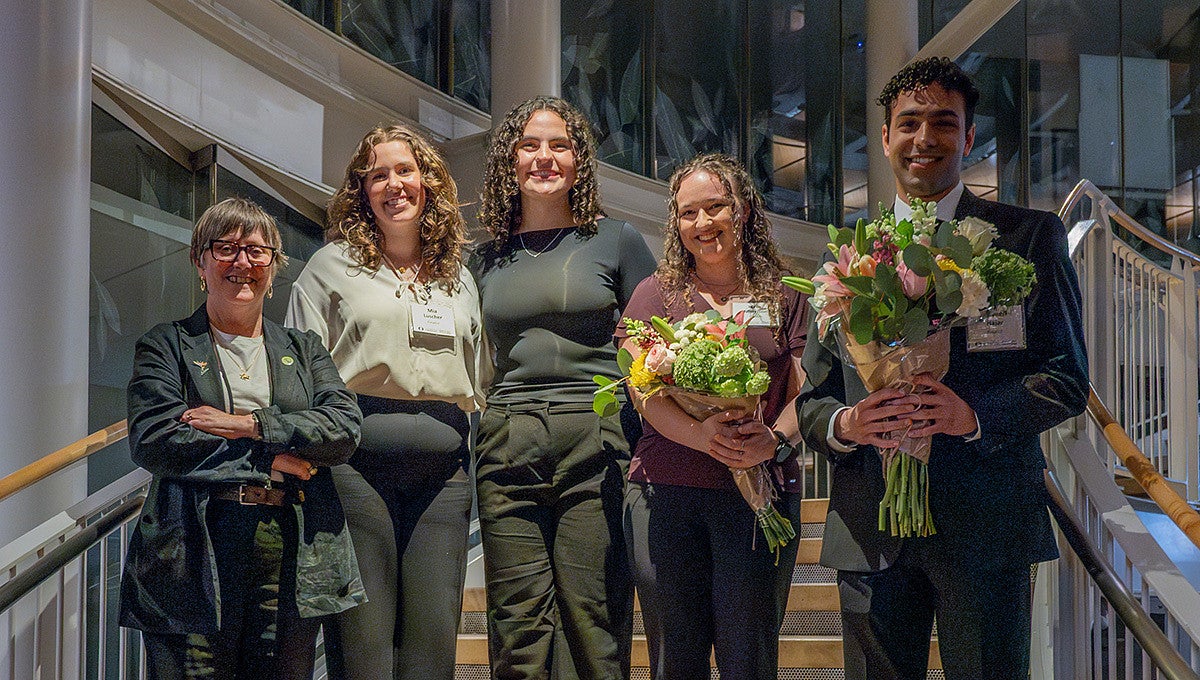
The Winners
1st Place ($1,000):
Auveen Hajar
Integrating Immune Profiling to Inform Outcomes in Orthopaedic Trauma
2nd Place ($750):
Mia Luscher
Can Pumice Help Conserve Salmon by Filtering 6PPD?
3rd Place ($500):
Sydney Weddle
Beta Adrenergic Receptor Sensitivity in Women with Polycystic Ovary Syndrome (PCOS)
People's Choice:
Erin Morrison
Science as Story: The Journey of Europa Clipper through a True Crime Podcast Lens
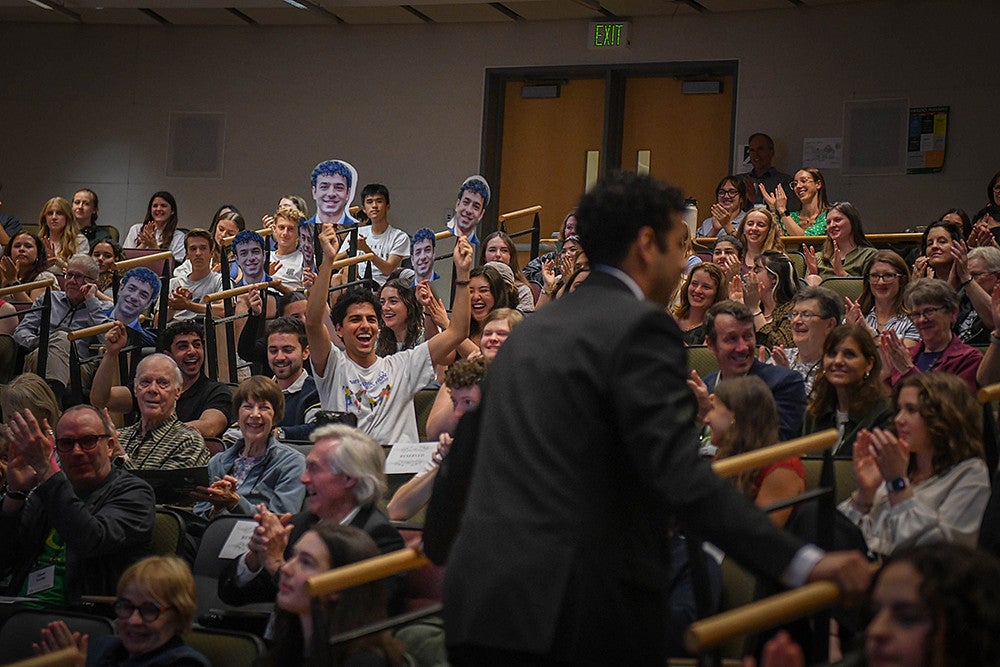
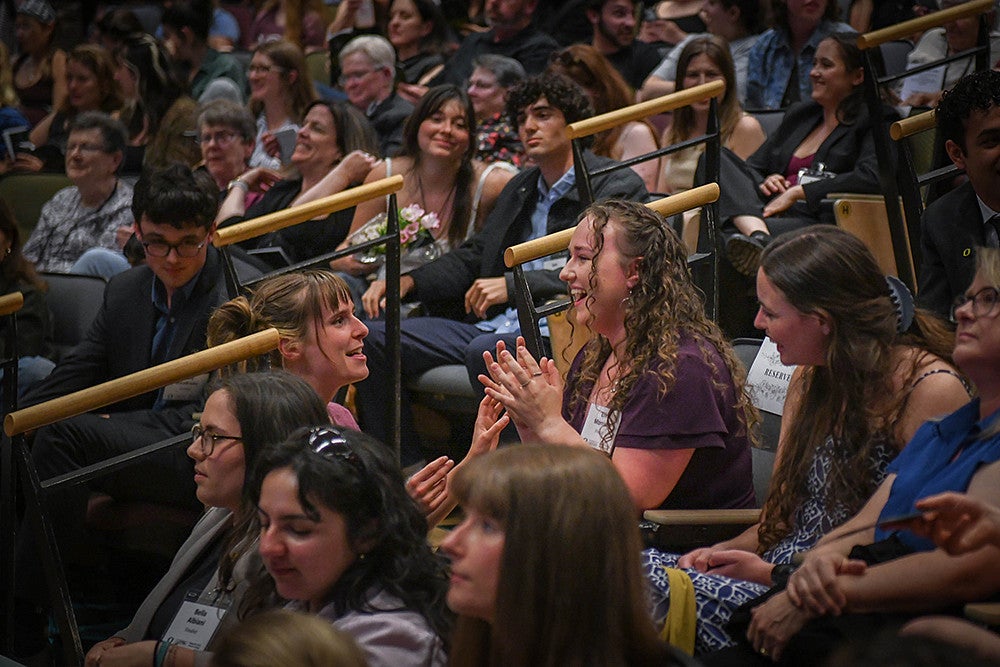
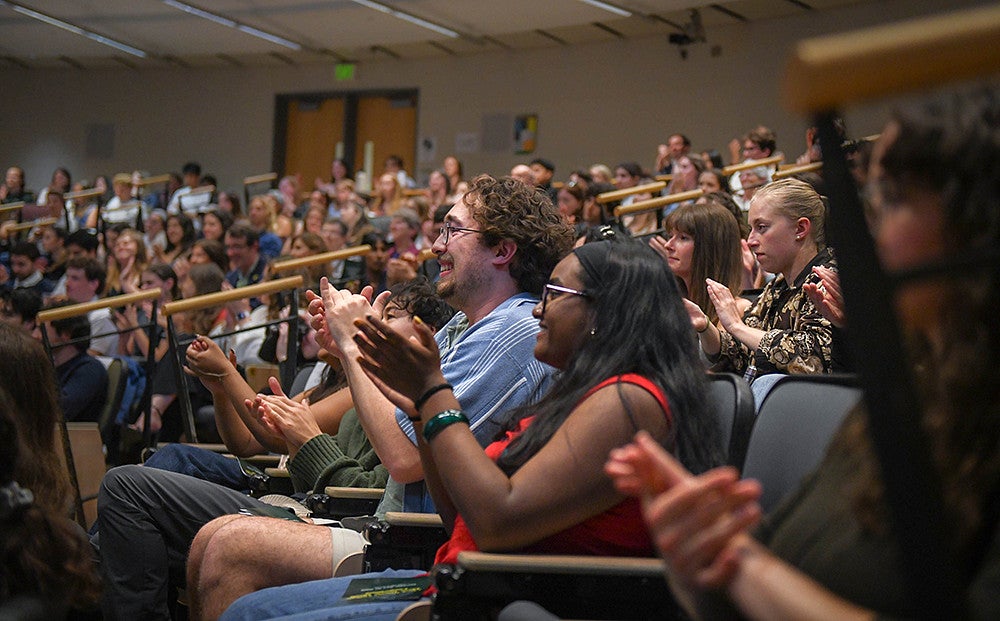
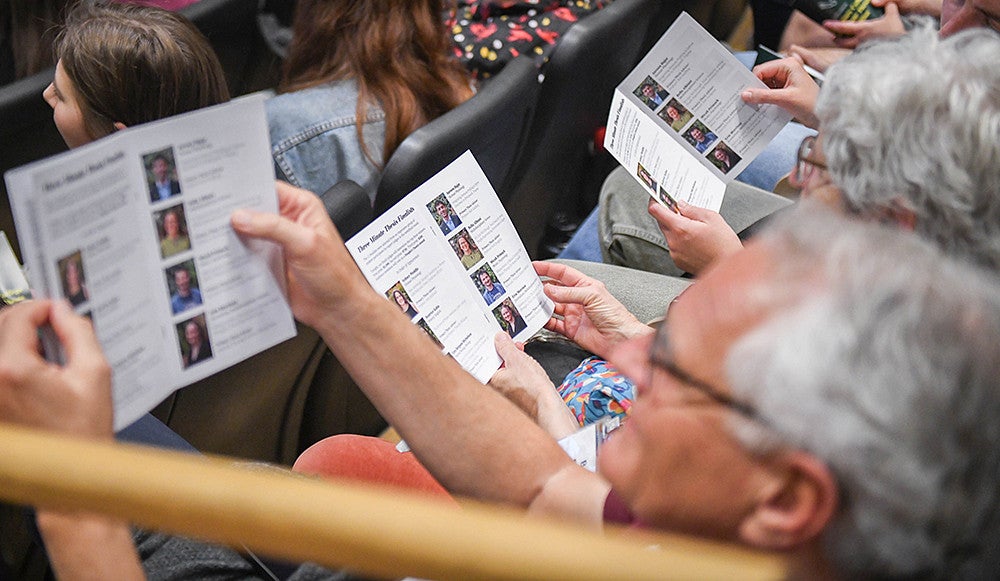
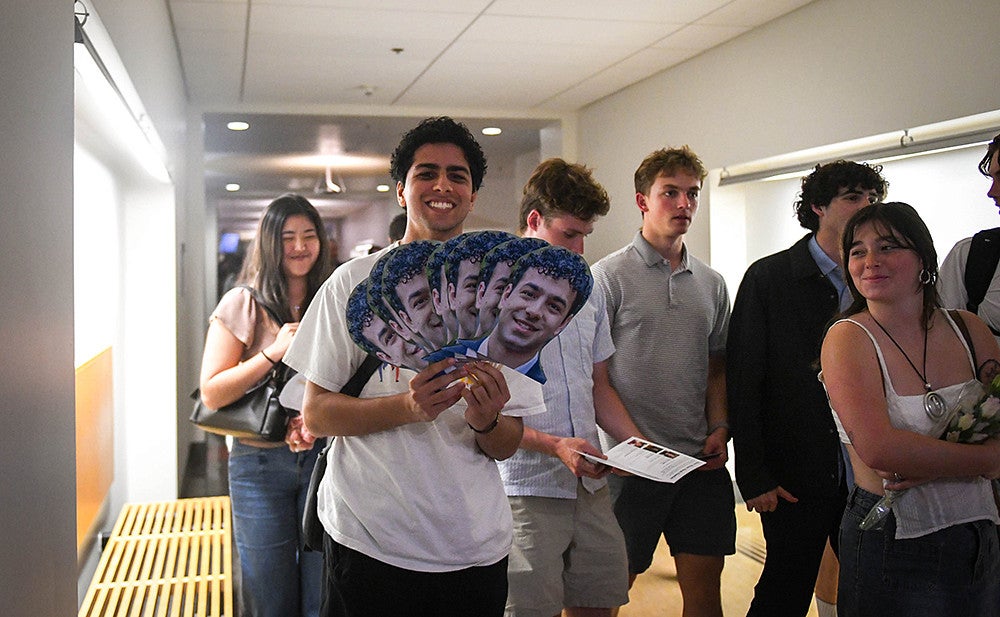
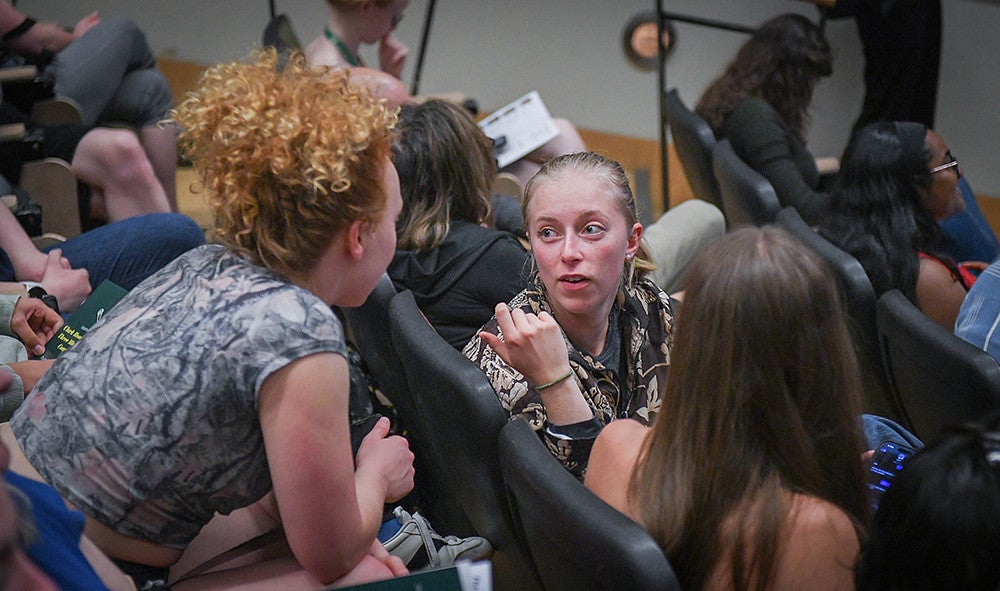
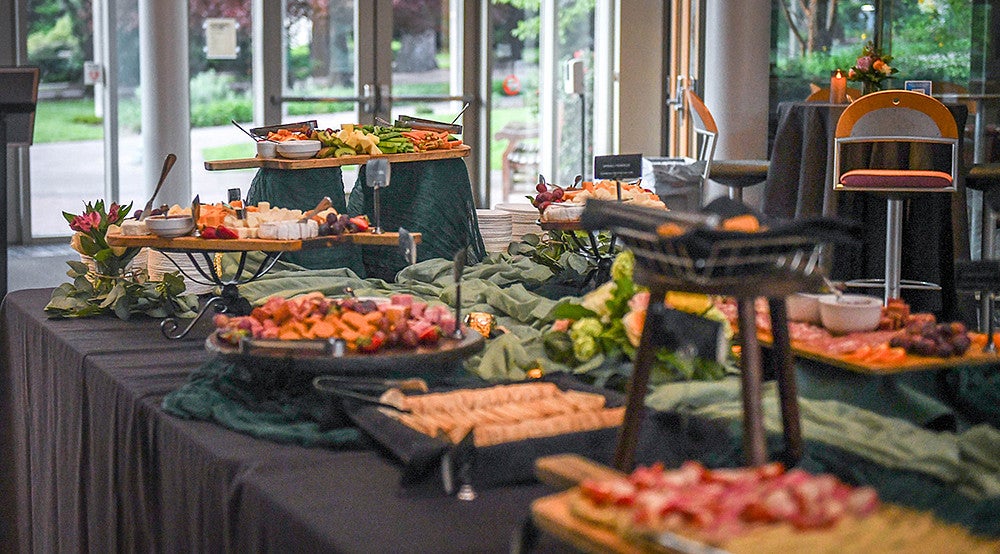
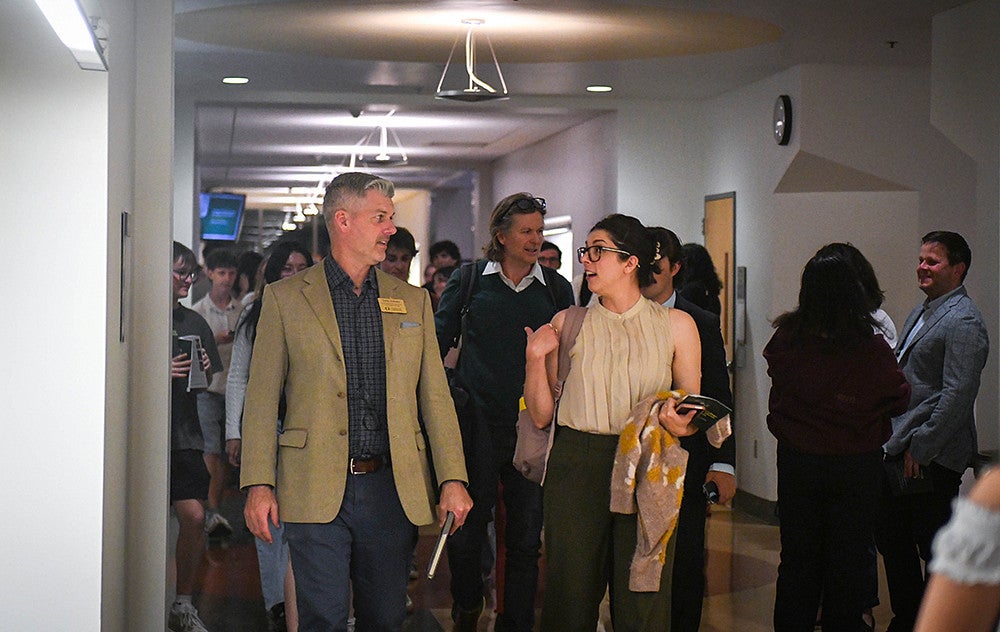
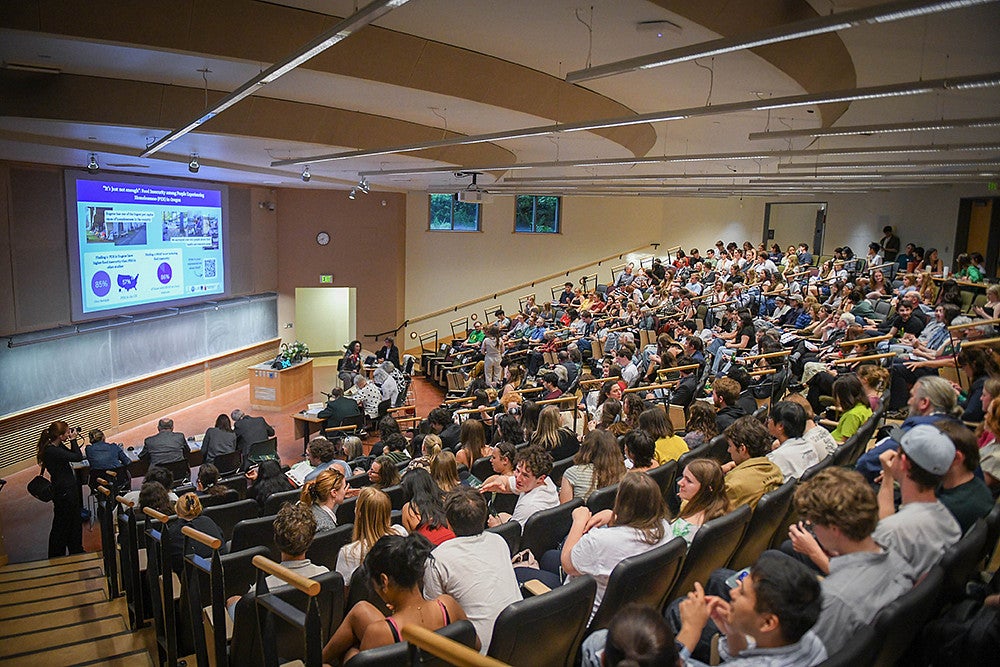
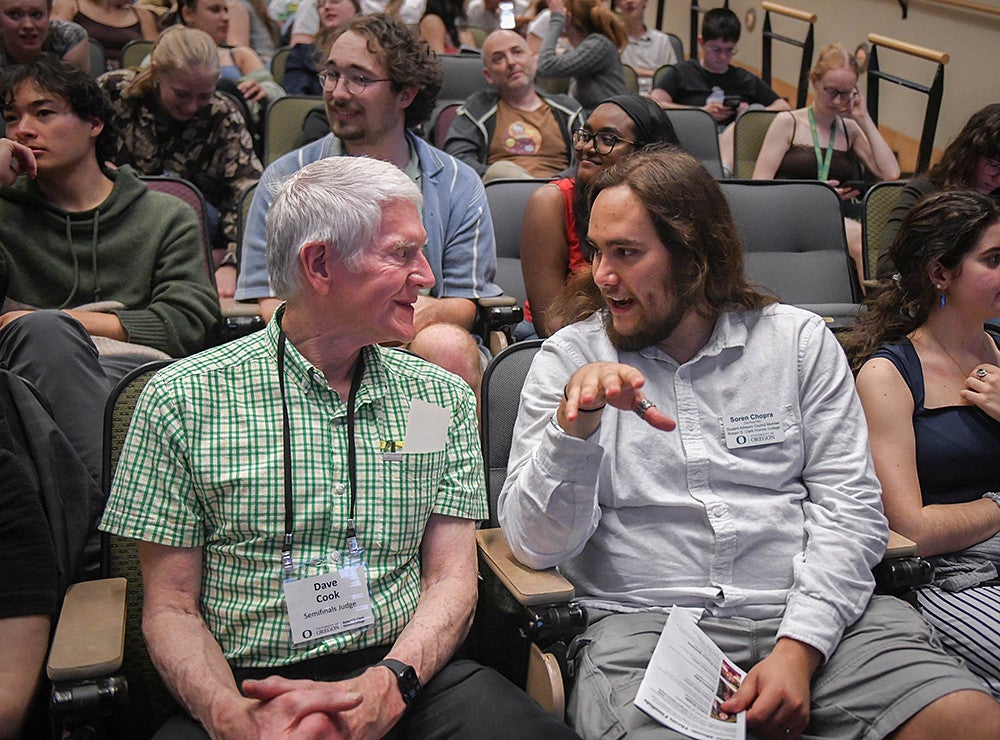
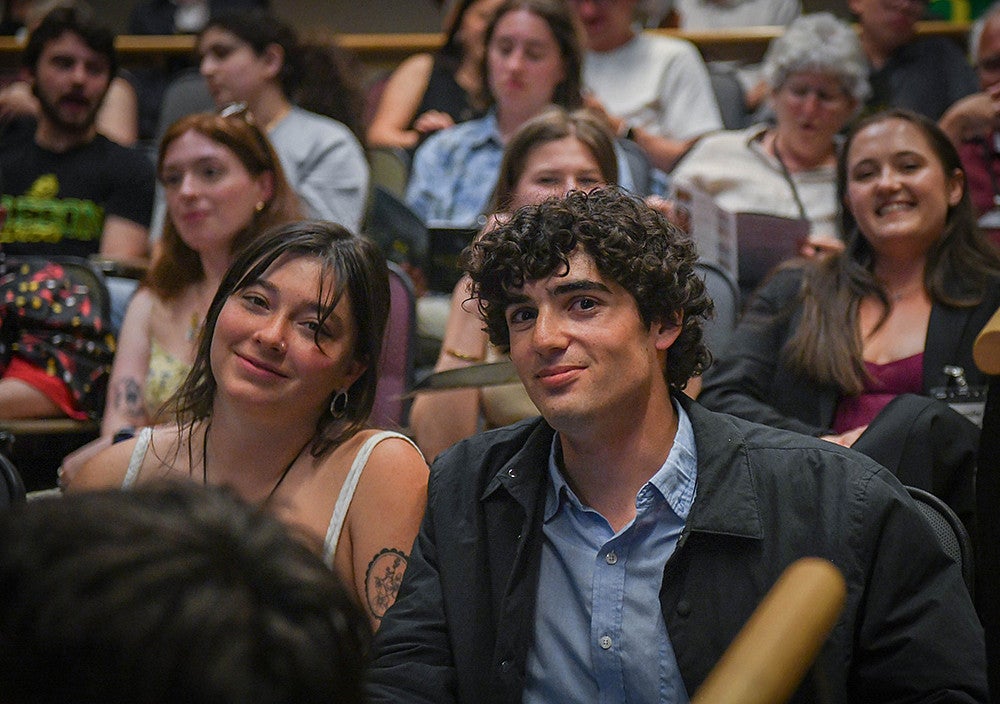
There were less than a dozen empty seats in Lillis 182 as more than 250 students, faculty, alumni and a variety of honored guests packed into the room on Thursday, April 30, 2026. All came to watch Clark Honors College seniors compete for the top prizes in the Fourth Annual Three Minute Thesis Competition. Eleven students earned spots in the finals and each well-rehearsed presentation let students’ expertise shine through and reflected the effort and care poured into their thesis topics.
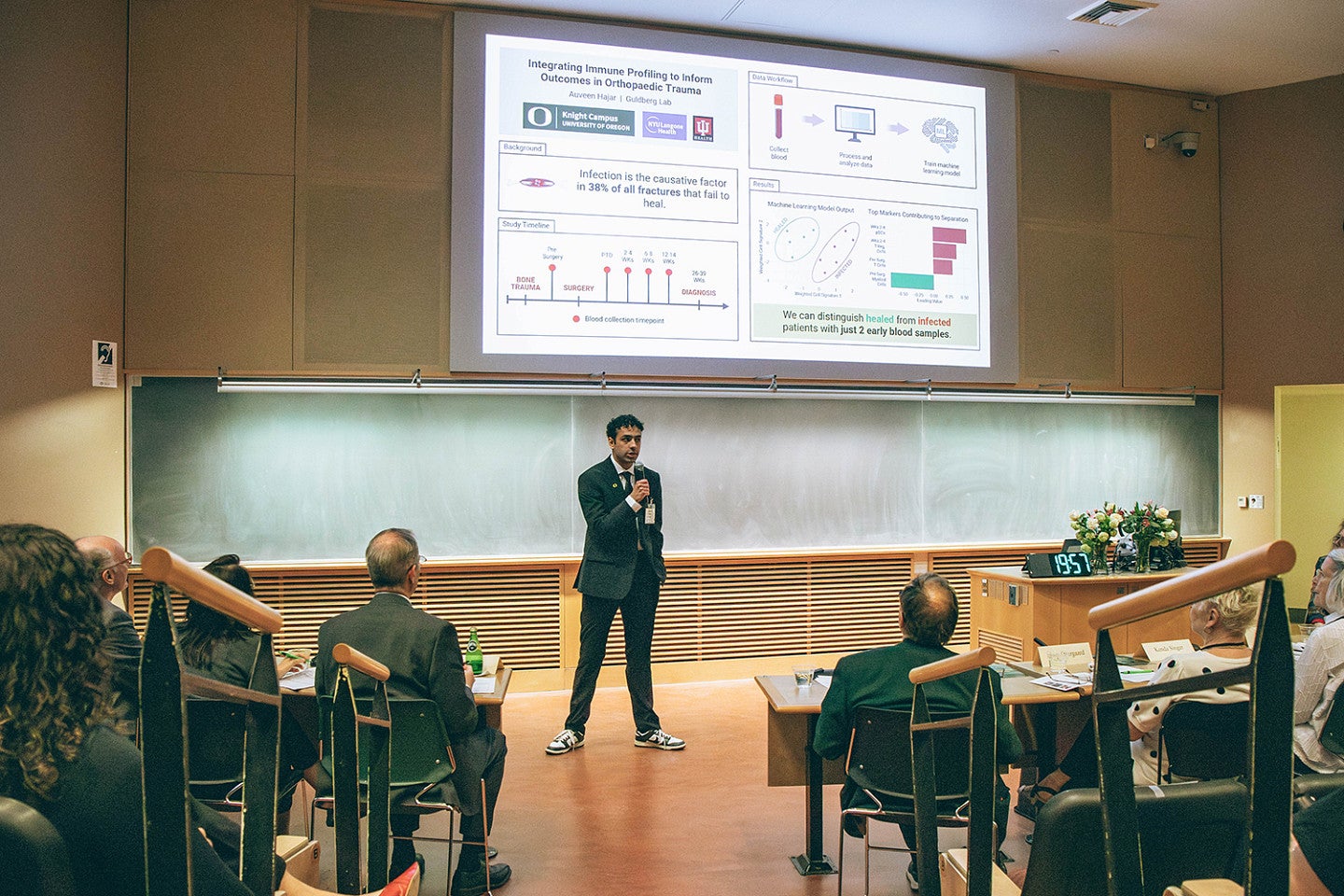
Auveen Hajar, a human physiology major and researcher at the Knight Campus for Accelerating Scientific Impact, energetically delivered the winning presentation on his thesis topic, “Integrating Immune Profiling to Inform Outcomes in Orthopaedic Trauma.” His research focuses on identifying combinations of blood biomarkers that can predict whether a patient recovering from a broken bone is at risk of developing an infection — something that can cause further complications and, in some cases, even lead to amputation.
“Infection is something that hides in patients,” Hajar said. “We don’t have a good way to risk-stratify which individuals are going to experience really bad outcomes in medicine due to infection.”
The ultimate goal, as Hajar explained, is to create a tool that requires only a single drop of blood to run the test. That tool is still a long way away, but according to Hajar, early insight could allow doctors to intervene weeks before symptoms appear. It would enable them to adjust treatment plans and potentially spare patients from additional surgeries that can cost hundreds of thousands of dollars.
“We’ll have to make our models stronger and stronger, but the day that we’ve done our due diligence and they can actually be used in clinics will be a day I will be smiling,” he said, beaming.
The CHC event – held in a classroom auditorium in the Lillis Business Complex – was buzzing with energy as each presenter used three minutes and one slide to explain their thesis projects to the audience. A competitive pool of semifinalists resulted in 11, not 10 finalists being chosen – and the top three were awarded prizes of $1,000, $750 and $500, respectively.
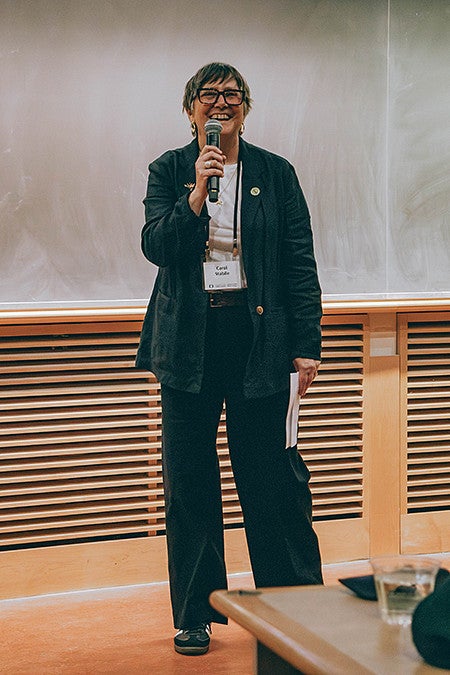
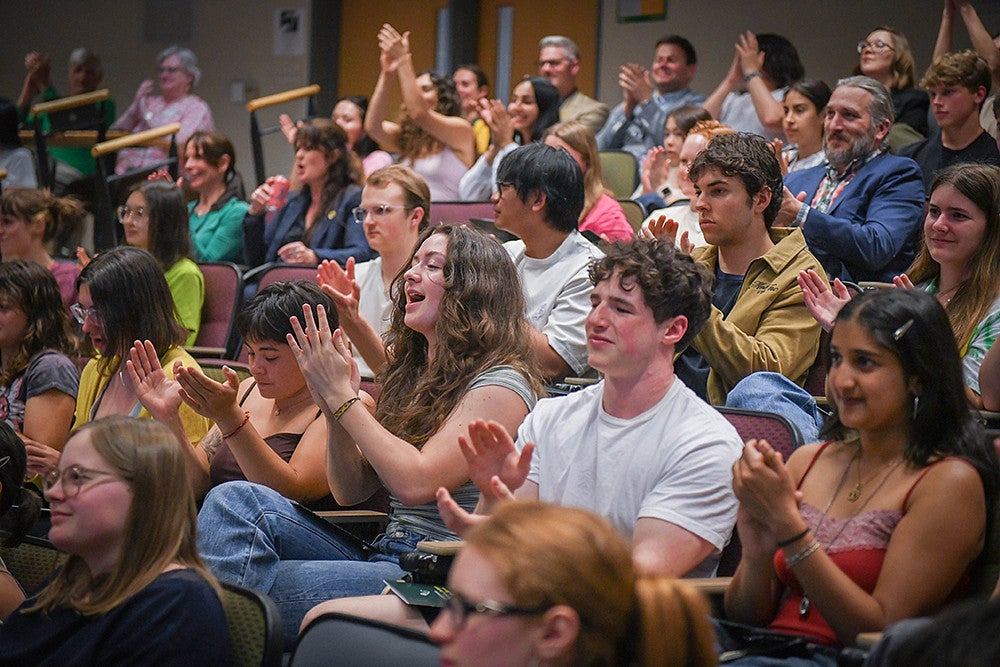
“The competition this year was fierce,” said Dean Carol Stabile, “and that was reflected in the high quality of the presentations.” Despite the competitive nature of the event, Stabile added, “it was beautiful to see the applause and enthusiasm that greeted each presenter as they walked onto and off the stage and to see all the competitors rooting for one another.”
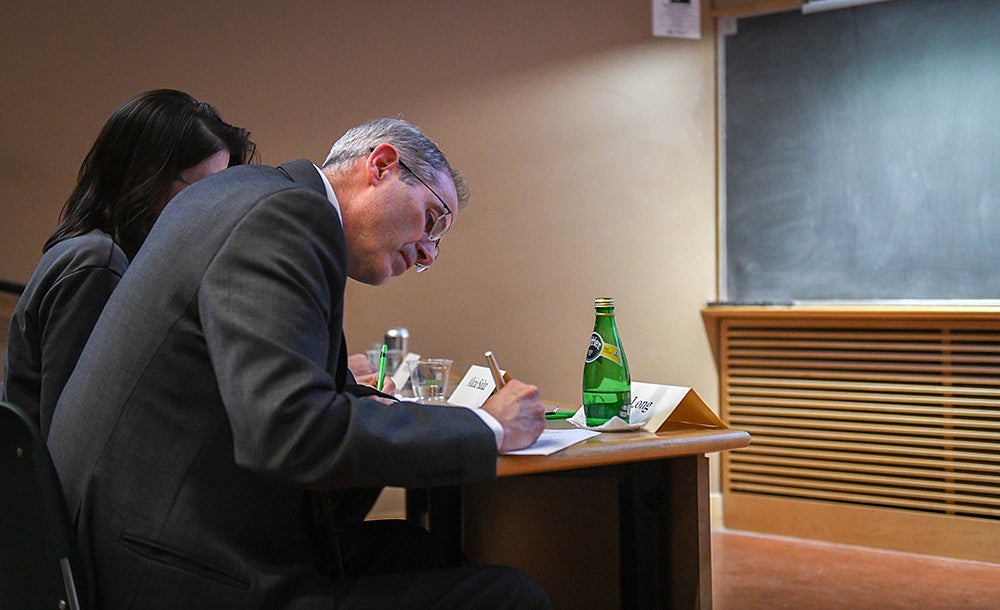
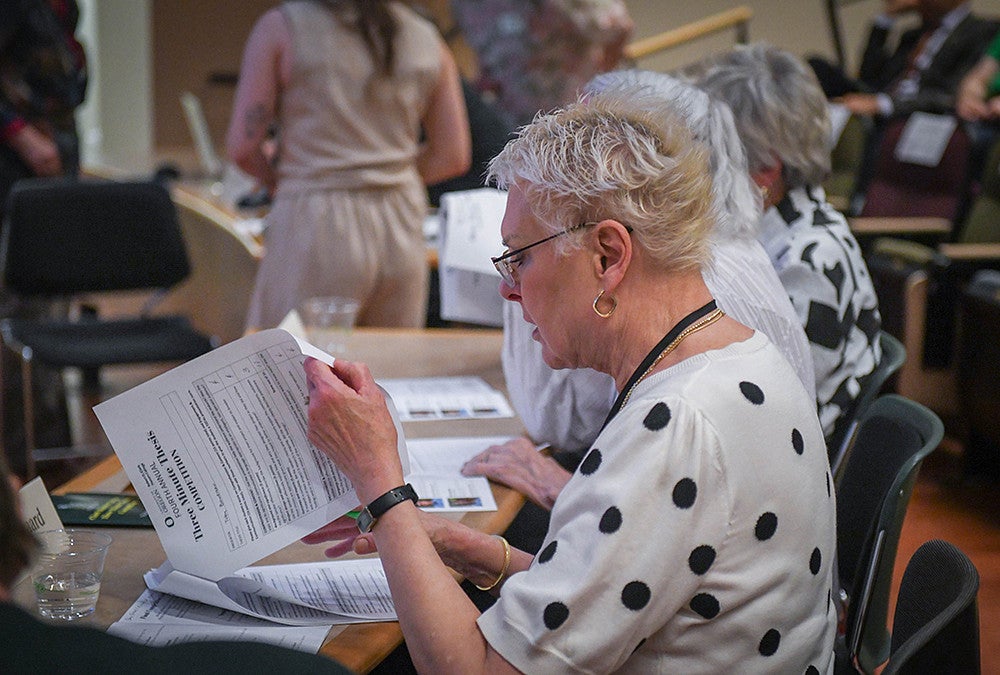
A panel of eight judges scored the finalists’ presentations. The judges considered background and significance; research and implications; outcomes and impact; oration; language and delivery. They also considered audience enthusiasm, as well as the contents of the presenter’s slides.
UO Provost and Senior Vice President Chris Long, who served as one of the judges for the event for the second year in a row, was impressed by the presentations. “Conveying substantive ideas in three minutes is no small task,” Long said. “Our Clark Honors College students are experts at it. The breadth and depth of their research is truly inspiring.”
The other judges for the event besides Long were: Margot Gerritsen, a recent guest instructor at CHC, professor emerita of energy resources engineering at Stanford University and cofounder of Women in Data Science Worldwide; Gene Grant, a CHC alum, attorney, and supporter; Win McCormack, a UO MFA alum who is the owner of The New Republic, former publisher of Oregon Magazine, and a cofounder of Mother Jones magazine; former Multnomah County Judge and CHC donor Mary Overgaard; Vice Provost and University Librarian Alicia Salaz; Kenda Singer, an alum, a donor and a longtime supporter of many UO programs; and Julie Tripp, former business reporter and columnist for The Oregonian and UO alum who supports CHC programs.
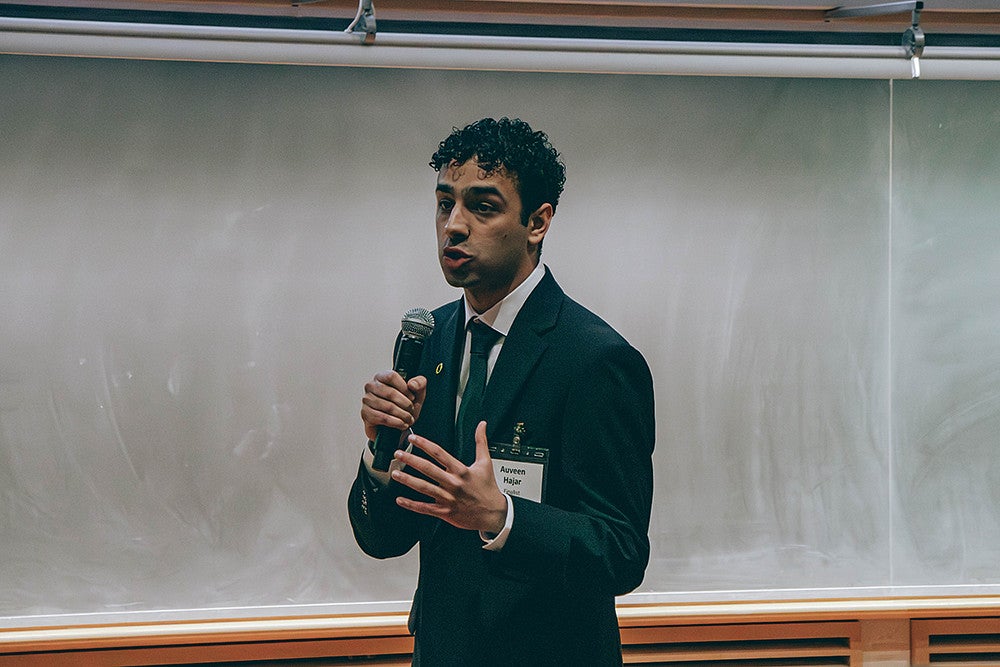
Hajar, who won first place, is a born-and-raised Portlander who attended Sunset High School. He intended to get involved in research outside the classroom from the moment he set foot on campus at UO, and it wasn’t long before peers in the CHC told him to be brave and cold-call labs.
After a conversation with a CHC graduate who was doing research at the Knight Campus’s Guldberg Lab, Hajar “fell in love with it,” he said. That same night, he sent an email to the lab manager.
Three and a half years later, Hajar’s experience in the Guldberg Lab has given him plenty of practice articulating his research both at conferences and to labmates. But his preparation for the competition looked different as he worked to balance jargon and explanation by practicing with friends. “I have an amazing support group that is willing to listen to me,” he said. “They saw a lot of different iterations.”
Though nervous at first, he says, Hajar didn’t hesitate when it came time to present. Describing a patient with a broken bone, Hajar guided the audience through a storyline, using graphs to explain the machine-learning algorithm his lab team developed to detect biomarkers indicative of infection risk. He showed the impact that his research could have in the clinical world with clarity and confidence.
Upon learning he’d won, Hajar said he felt speechless. “I don't have the right words for it right now. I'm just so grateful to be surrounded by so many amazing people and have had the opportunity to be peers with them. Anybody there could have won and is equally as deserving of a win tonight,” he said. “I'm just really soaking in the moment and proud to be a part of this young, but soon-to-be-probably historic event.”
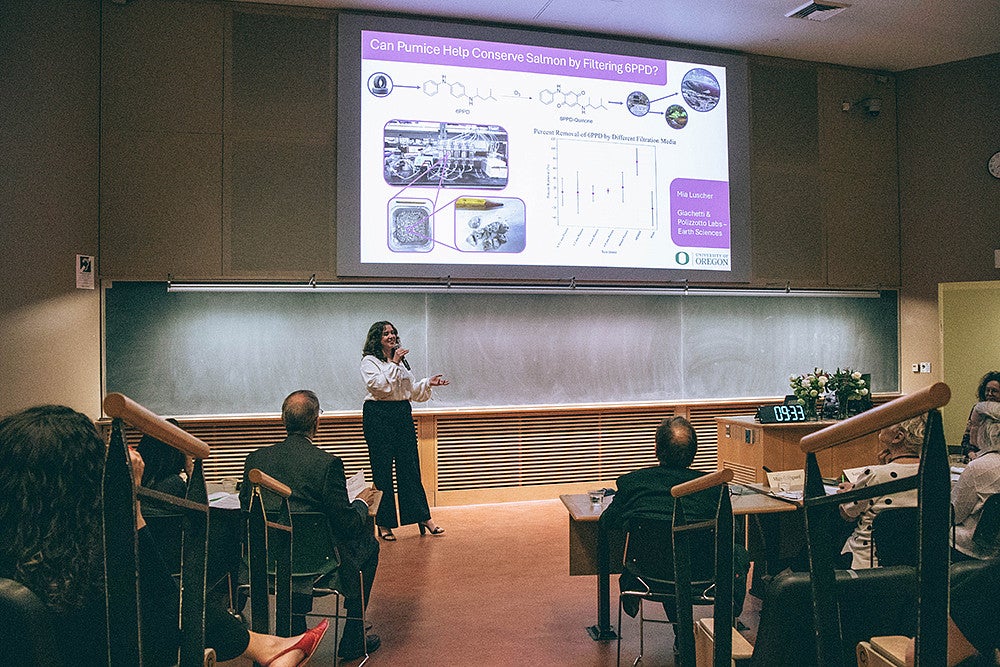
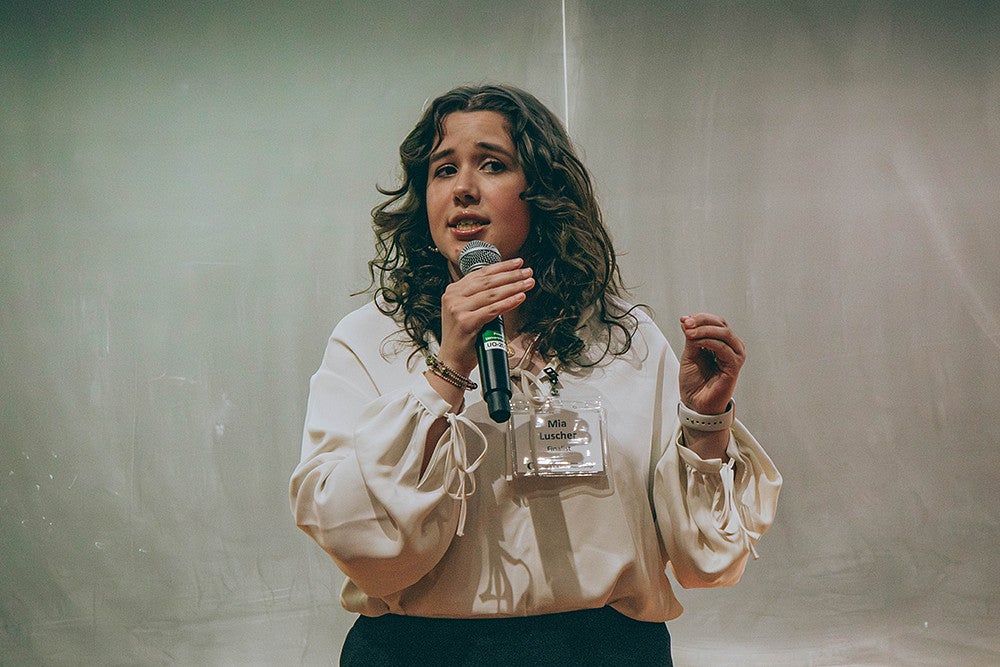
Second place went to Mia Luscher for her presentation “Can Pumice Help Conserve Salmon by Filtering 6PPD?” Luscher’s research tests whether the lightweight volcanic rock pumice can filter 6PPD, a chemical additive in tires that washes off roads into waterways and is toxic to fish, harming endangered salmon populations in the Pacific Northwest. Her findings propose new methods for combining pumice with soil or other filtration materials to bolster their effectiveness, but the goal remains to keep the solution practical. She envisions a storm-drain filter small enough to install in roads as an alternative to expensive infrastructural changes.
In her presentation, she talked about how deeply her connection to salmon runs. Luscher grew up in Everett, Washington, where her grandfather was a commercial fisherman, and the themes were everywhere. Her aunt’s basement has a swing made from a buoy, and fishing nets decorate the walls.
Luscher went last in the competition order, leaving her to sit with nerves as she watched each of her peers present before her. But once she got to the podium, the reflexes from weeks of practice took over. “I just kind of locked in,” she said. “Everything went off without a hitch.”
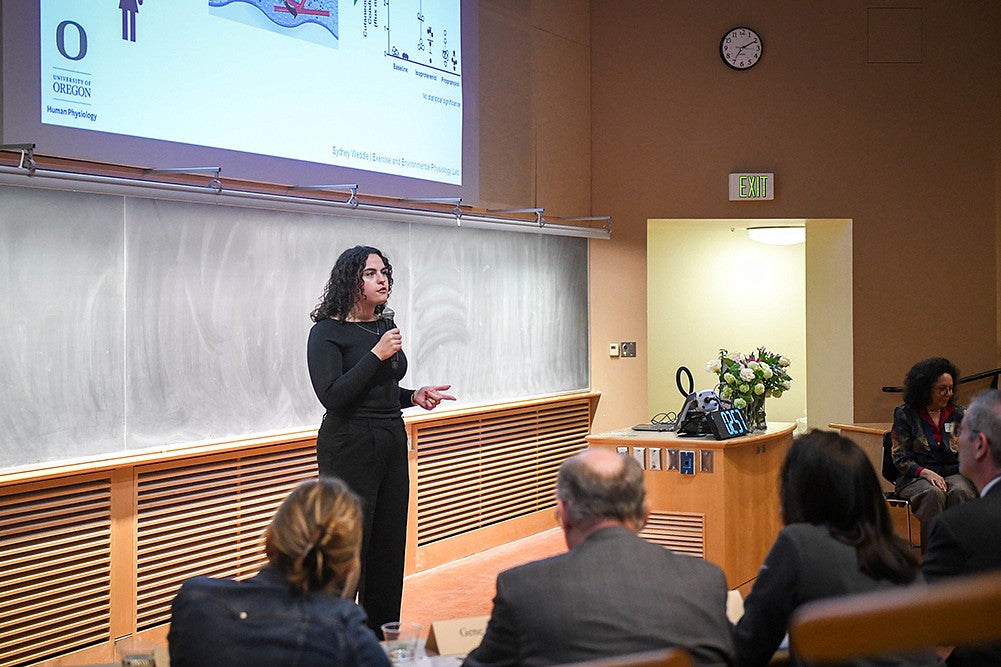
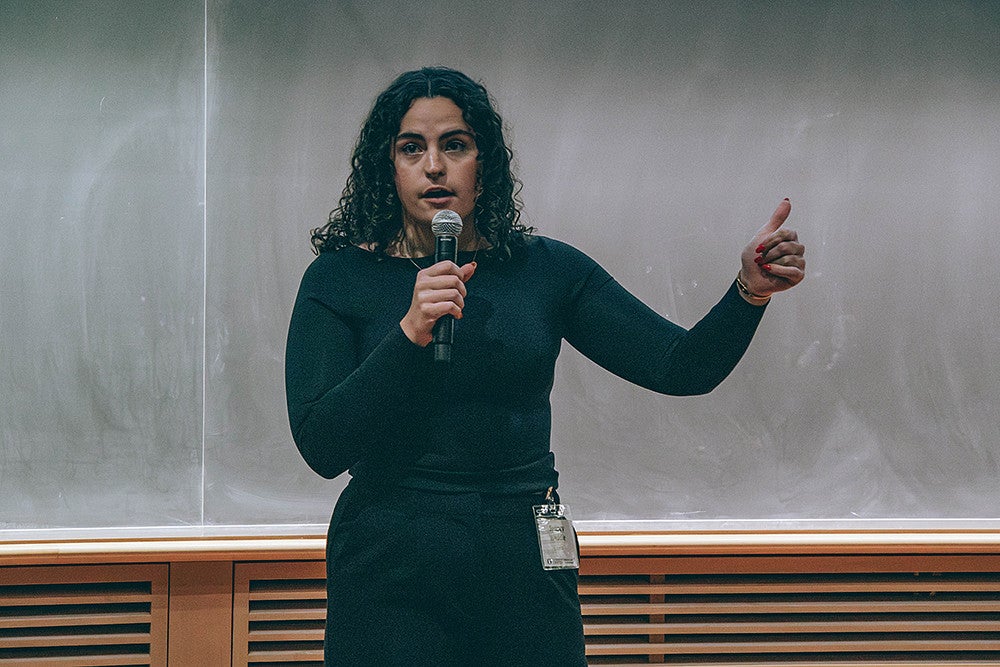
Sydney Weddle, also a human physiology major, was awarded third place for her presentation “Beta Adrenergic Receptor Sensitivity in Women with Polycystic Ovary Syndrome (PCOS).”
Weddle’s research examines how two drugs affect blood vessel function in women with PCOS – testing whether either could help manage the condition’s elevated risk for heart disease. Women with PCOS have an overactive sympathetic nervous system, which raises blood pressure and puts them at greater cardiovascular risk.
Her research is also personal, as Weddle herself has PCOS. In fact, before recruiting participants, she was a subject herself, experiencing firsthand what participants would feel on the table. It’s helped her support participants if they experience any discomfort. “I can say, ‘I was really uncomfortable when I did this too. Let’s put a pillow underneath your back, lift your knee up a little bit. I know exactly how you’re feeling,’” she said.
Weddle, who grew up in Portland and attended Westview High School, started drafting her three-minute script in January – months ahead of the semifinals. After revising it with her lab’s principal investigator, Dr. John Halliwill, she spent two weeks memorizing it on the treadmill, setting a 3-minute timer and resetting every time she made a mistake.
When it came time to present, her hours of dedication paid off in a confident, heartfelt delivery. She felt comforted knowing she was in a room full of her peers. “It made the room feel small,” she said. “And I went first, so that was really nice.”
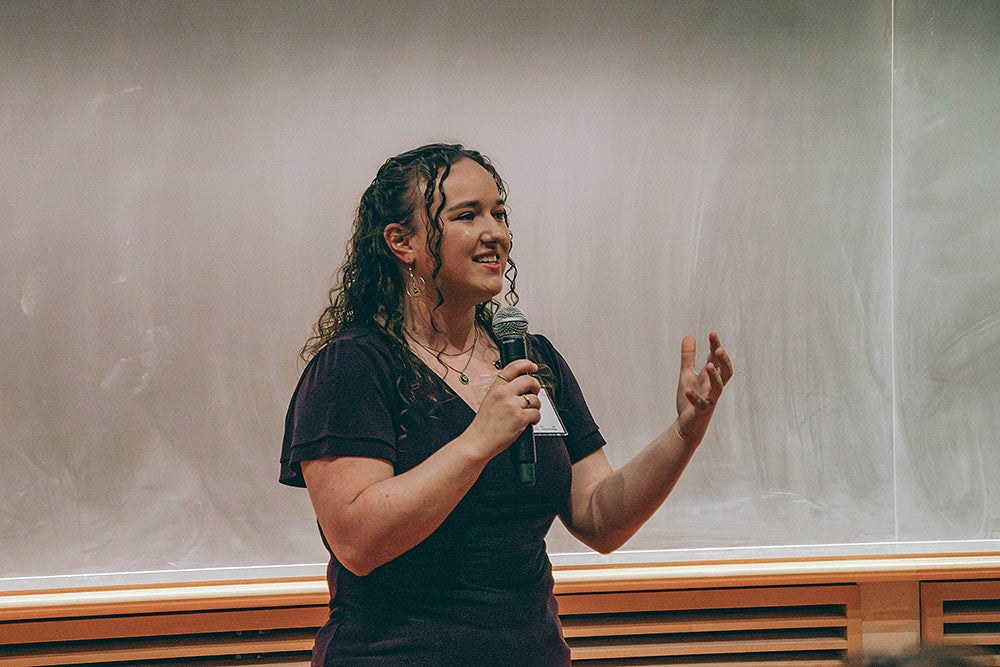
The People’s Choice Award winner of the evening was Erin Morrison, presenting “Science as Story: The Journey of Europa Clipper through a True Crime Podcast Lens.” Morrison, a multidisciplinary science and journalism double major, documented the first space mission designed to study one of Jupiter’s moons, Europa, through personal narrative and interviews with scientists.
The CHC Post wrote about Morrison’s journey to watch the Europa Clipper launch, and her experience waiting through a category-5 hurricane to see it, in 2024. She’s been working toward her thesis project since that trip, creating a true-crime-style podcast to create an entertaining form of science communication.
“My thesis is a creative project, so I didn't follow a traditional research approach,” Morrison explained. “I wanted the audience to get a taste of what listening to my final thesis product would sound like, so opening with the visualization of standing on Europa felt more impactful. It was important to emphasize the ‘Why?’ behind my creative choices before diving into the structure of my podcast series.
“As a science communicator whose project is rooted in making science more engaging and approachable, it seems perfect that I won the People's Choice Award,” said Morrison. “Overall, this was a great experience and helped me think about my thesis in a new way. I highly recommend that all CHC students participate when given the chance.”
Photos by Tessa Hill
The CHC’s 3MT event is modeled on a similar competition that began in 2008 at the University of Queensland in Australia, offering doctoral students the chance to refine their communication skills by briefly presenting their research.
As the CHC came out of the pandemic, the College was looking for new ways to build community. The 3MT seemed like a perfect showcase for the critical thinking and communication skills CHC students develop through producing the thesis project that all Honors College students complete in order to graduate.
“I’m always so impressed by the diverse array of projects our students pursue for their theses,” Stabile said. “Learning how to communicate about their work to public audiences is a challenge we take seriously in the CHC, and the 3MT demands that students be able to do that.”
“All the students who participated in the competition are winners,” Stabile said, “who build community in the CHC by sharing their joy in learning with broader publics. This is such an important community building event.”
“I'm so proud of everyone who presented. Everyone did a phenomenal job, and the atmosphere among the 11 of us was incredibly positive and supportive. I love how the wide range of topics we presented reflects the mission of the Honors College.”
Kaitlin Merriman, a junior psychology major, came to the event with a roommate as she’s deciding whether to pursue an honors degree in Psychology, which also requires a thesis. “The competition was amazing,” she said. “It got me really excited about doing research in the future.”
The 3Mt also inspires sponsors who support the event, like Mark Gall (whose late son Jonathan graduated from the CHC), Mary Overgaard and Dave Cook (longtime friends of the College and its students), Caren and Tim Hardin (both Ducks themselves, whose three children all graduated from the CHC), and Tower Snow (chair of the CHC Advisory Council and parent of a CHC alum).
Photos by Tessa Hill
Hajar noted that the Honors College’s discussion-based class format helped him feel comfortable articulating his arguments to rooms full of peers and learning to back up each claim with evidence. “If you feel very passionate about something, well, why do you feel that way? Tell us what got you there,” he said.
He plans to take a gap year before medical school — Oregon Health & Science University in Portland is his first choice — with interests in orthopedic trauma and general surgery. As for his $1,000 prize? “Y’know, I have to apply to medical school,” he said with a laugh. “I’ve heard it’s a little expensive.”
Luscher has a post-graduation trip to Australia planned with a friend, during which she plans to put the $500 in prize money toward trip expenses, including fulfilling a dream to swim with whales.
After graduation, Weddle has an internship lined up at Columbia Sportswear in their product innovation and physiological testing department. She said she’ll likely apply to graduate school, and is looking into taking the MCAT, but she’s comfortable not knowing just yet. Her $750 prize? “Invest it,” she answered almost immediately. “I also really need a new pair of jeans.”
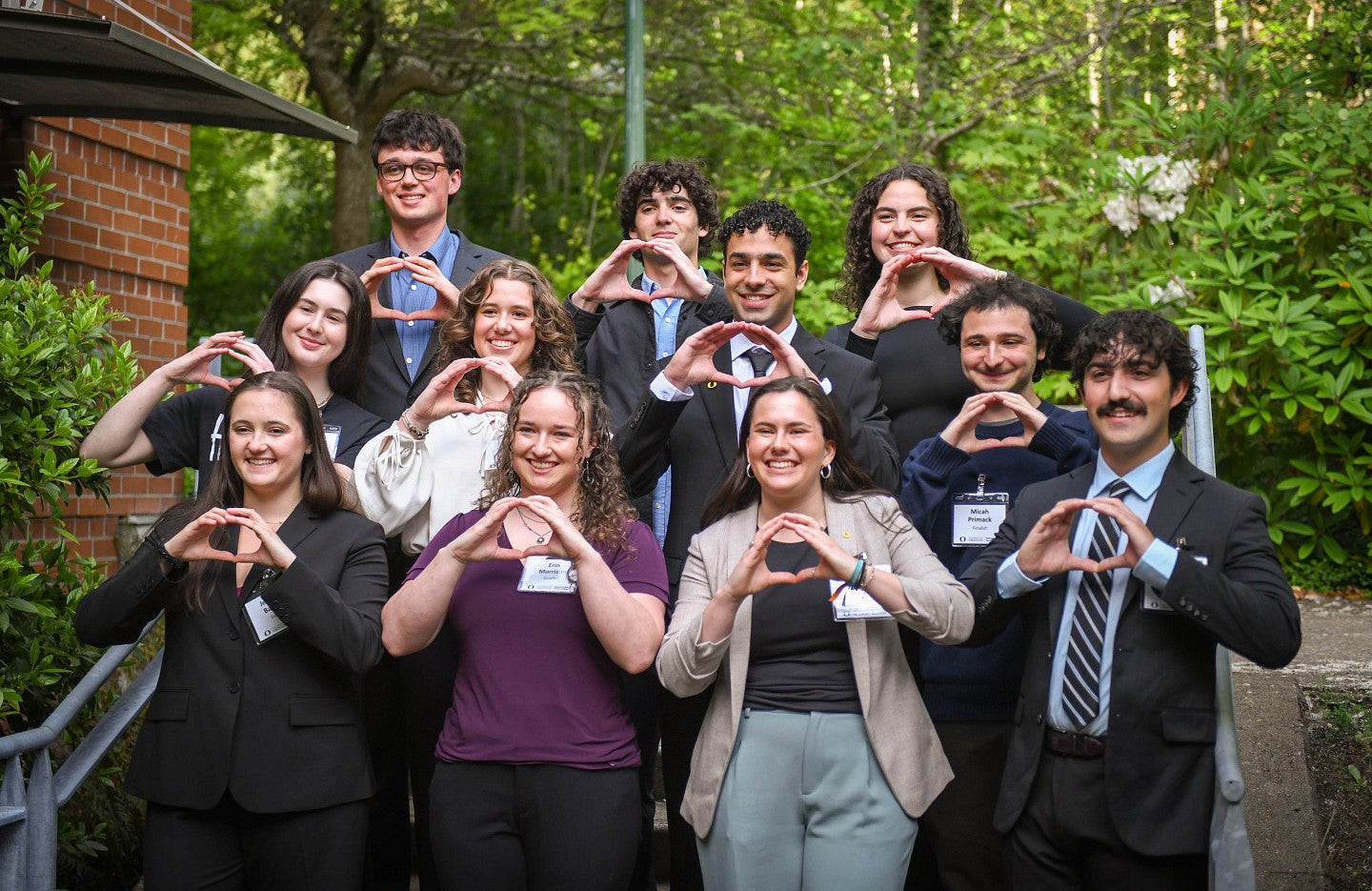
The 2026 CHC Three Minute Thesis finalists also included:
Beatrice Kahn
Majors: History; English
The History of Project NewGate (1967-1974)
Primary Thesis Advisor: Associate Professor Timothy Williams
Ezra Bergson-Michelson
Majors: Marine Biology; Biology
Signals in the Sediment: A Biogeochemical Analysis of Geologic and Land-Use History of the Ni-les’tun Marshes
Primary Thesis Advisor: Assistant Professor Lillian Aoki
Bella Albiani
Major: Multidisciplinary Science
It’s Just Not Enough: Food Insecurity Among People Experiencing Homelessness in Eugene
Primary Thesis Advisor: Professor Josh Snodgrass
Micah Primack
Majors: Music; Psychology
Measurement of Musical Identity to Tailor Music Therapy for Mental Health
Primary Thesis Advisor: Associate Professor Zachary Wallmark
Sam Golden
Major: Data Science
Climate and the Oregon Energy Grid
Primary Thesis Advisor: Assistant Teaching Professor Andrew Muehleisen
Jennifer Barnett
Major: Business Administration
Revolutionizing Philanthropies: How Blockchain is Transforming Nonprofit Operations
Primary Thesis Advisor: Associate Professor Alex Murray
Toby Boudreau
Major: Sociology
Assess the Role of Imperialism on Energy Regime Development in the Global South
Primary Thesis Advisor: Associate Professor Julius McGee
Watch each of the 10 finalists give their presentations at the Three Minute Thesis Competition.