
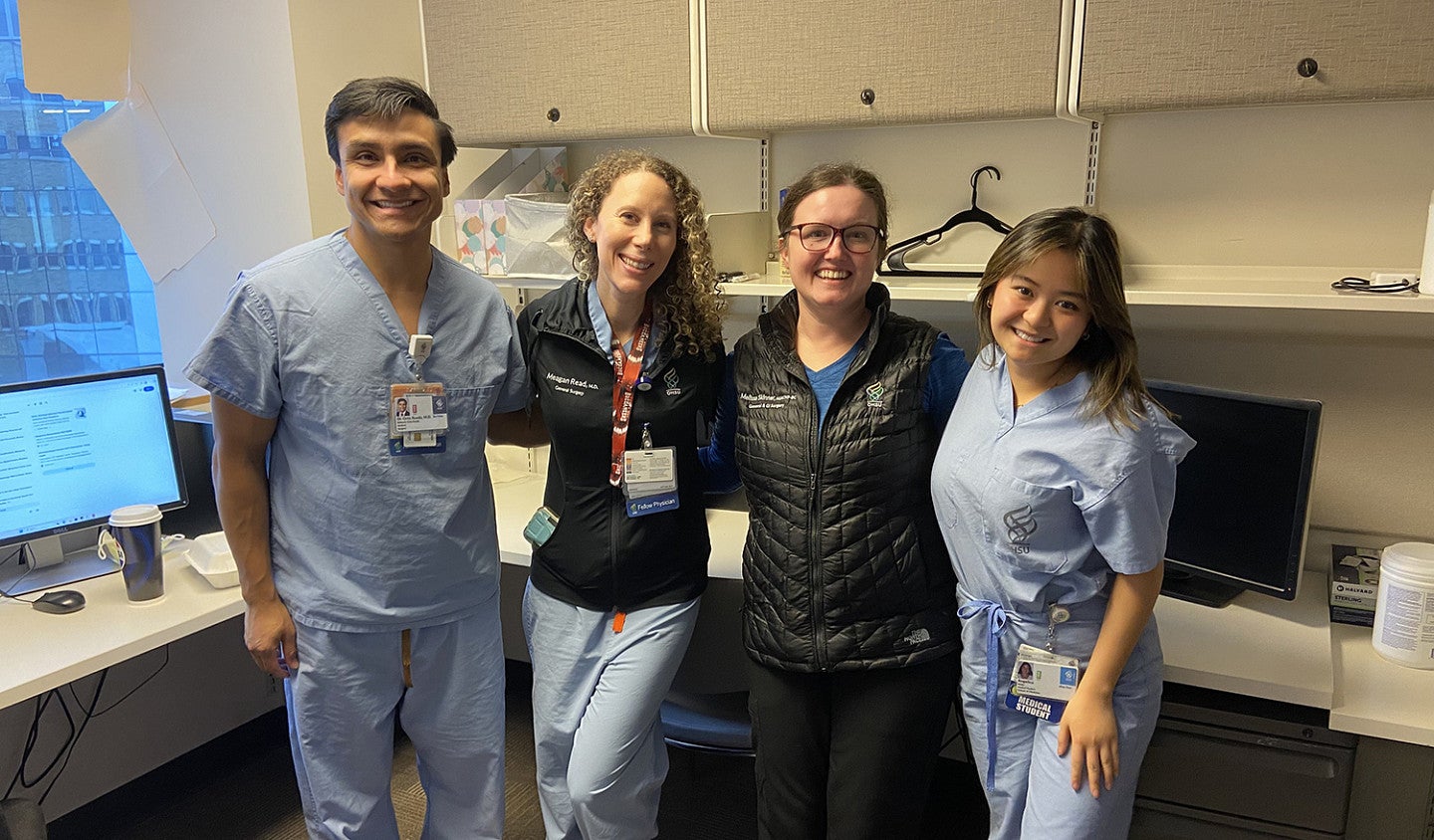
The next generation of doctors
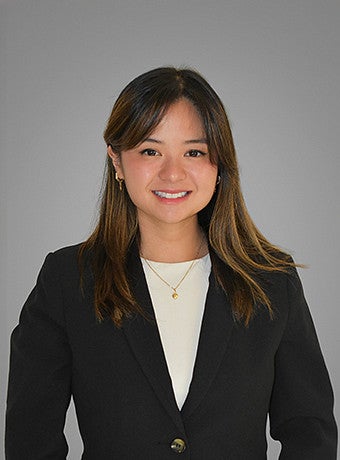
CHC Class of: 2022
Major: Biology
Favorite book: “Crying in H Mart” by Michelle Zauner. It is a stunning, beautifully written portrait of family, love, the Asian American experience, and creating meaning out of grief. I recently re-read this and cried my eyes out.
Song on repeat: “Danny’s Song” by Loggins & Messina
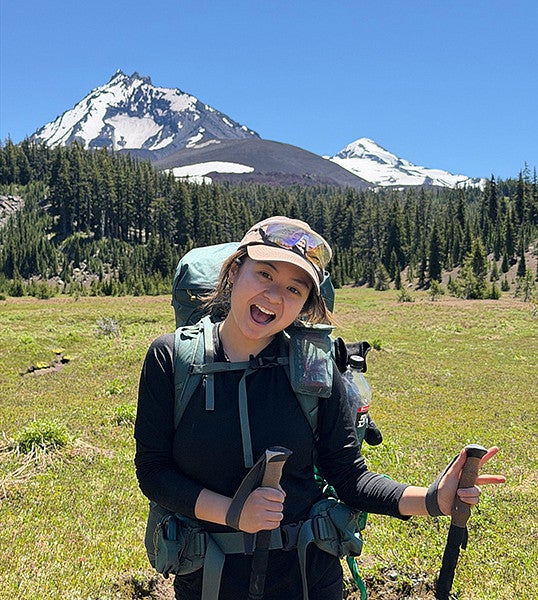
How do you spend your free time: I like to read (currently: “Rules of Civility” by Amor Towles), watch movies with friends at the theater, cook meals with ingredients from the local farmer’s market, and run and cycle through the beautiful paths and trails in Portland.
Role model: My parents, my professors, Dr. Stabile at the CHC and Dr. Sullivan at OHSU, as well my senior resident, Alex Belzer; and if we’re including fictional characters, Jane Eyre from the titular novel by Charlotte Bronte.
Three things you can’t live without? Wired headphones, Burt’s Bees lip balm, Hoka Mach 6 running shoes
As a 2022 graduate of the Clark Honors College, Angelica Mejia fondly remembers her time at the University of Oregon. She participated in a variety of challenging courses and joined a lab where she gained invaluable research experience. And she took advantage of faculty members who were always available to offer mentorship and advice.Her time as an undergraduate student solidified in her mind what would come next: medical school.
In fact, medicine was the cornerstone of Mejia’s childhood. Her parents met and fell in love when they were both in medical school at De La Salle University in the Philippines. Shortly after they finished, the pair emigrated to the U.S. The middle of three siblings, Mejia grew up in Salem, Oregon.
Her father worked in internal medicine at Salem Hospital and as a primary care physician for Kaiser Permanente in Salem. Her mother stayed at home and raised the children. “Honestly, medical jargon is somewhat of a second language in our household,” Mejia recalls. “We never said calf; we always said gastrocnemius.”
Given her father’s experience, Mejia has always felt that she had big shoes to fill. She remembers when she was five years old, her father would sometimes bring her along to overnight shifts at the hospital. She recalls sitting patiently in the on-call room and waving to patients during rounds.
She went to nearby Sprague High School and excelled in her classes, growing accustomed to the idea of becoming a doctor. But she wanted to be sure that it was the right choice and not overly influenced by her family.
The Honors College was just the test she needed. She loved her wide range of classes, especially the ones outside her STEM comfort zone. Many of her CHC humanities courses sharpened her critical-thinking skills. “I feel like all these habits run deep, too, with how I interact with literature, film, news, and plays,” Mejia says now.
Throughout her four years as an undergraduate, Mejia put her commitment to medicine into practice. She served as the chair of the Student Health Advisory Committee, conducted research in UO’s Jaramillo Lab, and worked overnight shifts at the now-closed Sacred Heart University Hospital and then at PeaceHealth Riverbend Medical Center.
As a volunteer at Occupy Medical, a free clinic in Springfield, Mejia recalls a pivotal encounter she had with an uninsured patient. The woman had diabetes and had lost her husband recently. She burst into tears as she spoke of his death. The staff took action immediately, offering her comfort.
“Medicine,” Mejia recalls thinking then, was “a way to help care for people who have fallen through the cracks of our healthcare system.”
The best doctor, Mejia learned, is one who listens. “Really good doctors are the ones who let the patient complete their story,” she says now. Without a doctor-patient relationship rooted in empathy, trust, and understanding, getting to the bottom of a diagnosis can become far more difficult.
The clinic experience showed Mejia medicine was not simply an academic endeavor, but the most direct way to make a meaningful, lasting difference in people’s lives.
Now, with only five months remaining for her in medical school at Oregon Health & Science University, the CHC Post talked to Mejia about choosing a residency program, her experiences in med school, and her favorite memories from the Clark Honors College.
This interview was edited for content and brevity.
How did you know you wanted to be a doctor?
I know I’m so privileged to be able to have access to doctor mentors so early in life, but it was really meaningful seeing what (my parents) would do for the community. I would see them advise, give medical advice to family overseas, and patch up kids' elbows if they fell off their bikes. Then I got to college, started volunteering at a free clinic, and I decided this was actually what I wanted to do. It’s not just something that my parents did that I defaulted to. It’s actually something I feel very passionate about.
Why did you decide to go to Honors College?
I kind of wanted the liberal arts experience while also being in a large university. So, you kind of got the best of both worlds, and I knew going into college that I wasn’t ready to let go of literature and history classes. I was already somewhat considering the pre-med track, and I knew that if I did that I had the rest of my life to just think about medicine and only medicine. At the time, I wanted my education to remain broad, and I’m really glad I did that. My all-time favorite class was the Calderwood Seminar on social justice led by Carol Stabile, the dean. I felt like I really flourished as a writer under her tutelage. I had a great time in the rest of the Honors College, too, because I was surrounded by sort of like-minded people who were also really curious about the world. And honestly, so many of those kids were smarter than me, so I felt like I was smarter by osmosis. It was really a treat to even be part of those discussions.
Tell me a little bit about medical school. What’s that experience like?
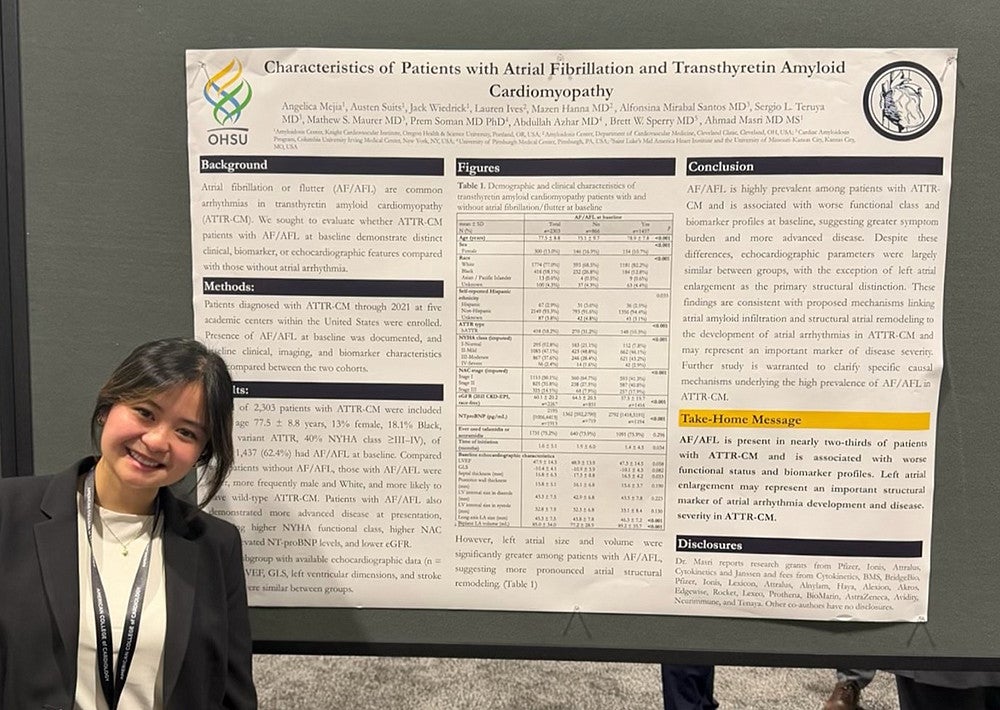
I’m almost done. Five months to go. It’s the hardest thing I’ve ever done for sure. Like not just intellectually, but emotionally. I remember we had this course at OHSU that we had to take the first couple of years or so. It’s called narrative medicine, where you write essays based on patient experiences that you’ve had, and then you share it with a class. And I remember after one patient encounter, the patient actually died. I sat down at my computer and started writing my essay for the narrative medicine course, and I just started crying.
Honestly, I felt so much better after writing it and sharing my writing with my classmates. From the Honors College, I learned a lot about writing because I took a creative writing class, and then we kept writing essays throughout all our classes, as well. I’m happy that I became a better writer and learned how to verbalize feelings better, because that skill has helped me sort of bring meaning to some of the heavier experiences that I’m having in med school right now.
What have you learned about yourself in med school?
It is so different from your undergrad courses. In undergrad, there’s a set amount of information you can learn for a course, get pretty good at knowing it very well, and then be very prepared for tests. Whereas medicine is so broad. You can be tested on anything under the sun. So, you can and you should prepare as much as possible, but there are things you are not going to know and that’s OK. So, tolerating ambiguity has been something that I’ve learned how to do.
For example, when you’re on service with an attending, sometimes they’ll ask you questions like, “What are the top three causes of a pneumothorax?” Or “Do you know what biomarker ulcerative colitis is associated with?” And I remember getting a lot of those wrong, even though I would study so hard prior to those rotations. I remember thinking: “Why don’t I know these things?”
Also, sometimes we just don’t know why a patient is sick. Sometimes we’ve run out of tests, and maybe the medicine is not advanced enough to discover why this patient is feeling this way. I remember feeling so dissatisfied with that sometimes, in telling a patient that we don’t know what’s causing your symptoms. There’s only a finite amount of power that we have as physicians, and sometimes we don’t have all the answers.
What advice do you have to incoming CHC students who may want to pursue medicine?
I think more important than figuring out how to get into medicine, figure out why you want to go into medicine. If you’re going to commit yourself to seven-plus years of training, plus school, plus debt, plus a lot of work and sleepless nights, you’ve got to be sure that you want to do it.
I remember back in my day when I was in college, we’d have these pre-med clubs where doctors would come in, and they would talk about the coolest thing they’ve ever seen. I think it’s just as important, if not more important, to know what the most boring day of a doctor is like. To really see what the bread and butter of medicine is like. So, if you have the opportunities, shadow doctors as much as possible. Get a clinical job, in a hospital or at a clinic. Anything where you see what a physician does and how they interact with patients.
“From the Honors College, I learned a lot about writing ... I’m happy that I became a better writer and learned how to verbalize feelings better, because that skill has helped me sort of bring meaning to some of the heavier experiences that I’m having in med school right now.”
What’s your why?
It’s the best job in the world. I mean that from the bottom of my heart. I’ve always loved medicine. But being in it, being entrenched in it now, and seeing how much agency you have and how much you can help someone who’s vulnerable and in a time of need has been so rewarding. There’s not a single day in my life that I don’t feel like I’ve made a difference in someone’s life, even in a small way. And I think what motivates me to keep working harder, studying harder, and doing well is the fact that you’re actually saving someone’s life. You have the opportunity to make their life better, and I think it’s rare. You can see the outcomes of your labor right in front of you, in person, and that’s just so rewarding.